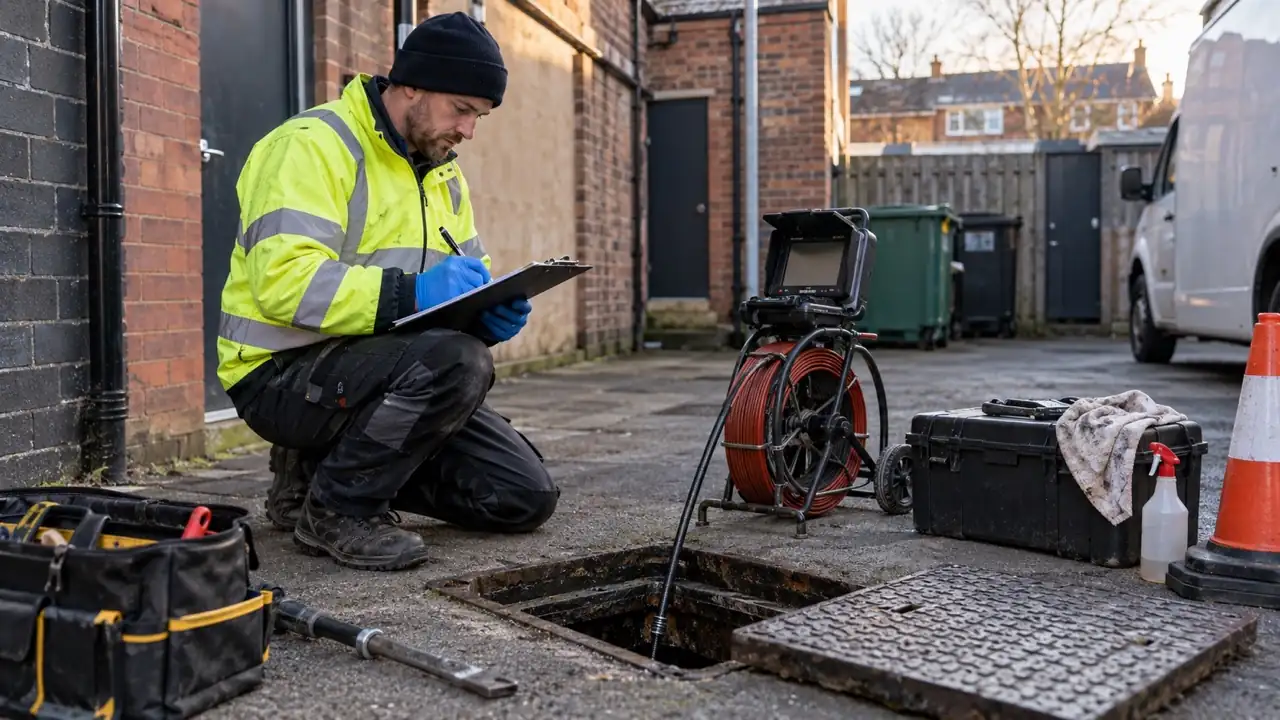
Before appointing a contractor
- Check the exact business that will perform the work
- Ask for evidence supporting a repair recommendation
- Confirm what is included and how additions are approved
- Check relevant insurance and waste-handling arrangements
- Keep inspection footage, estimates and invoices
Comparing a quotation
Two prices may cover different work. Check whether access, clearance, CCTV inspection, waste removal, reinstatement and VAT are included.
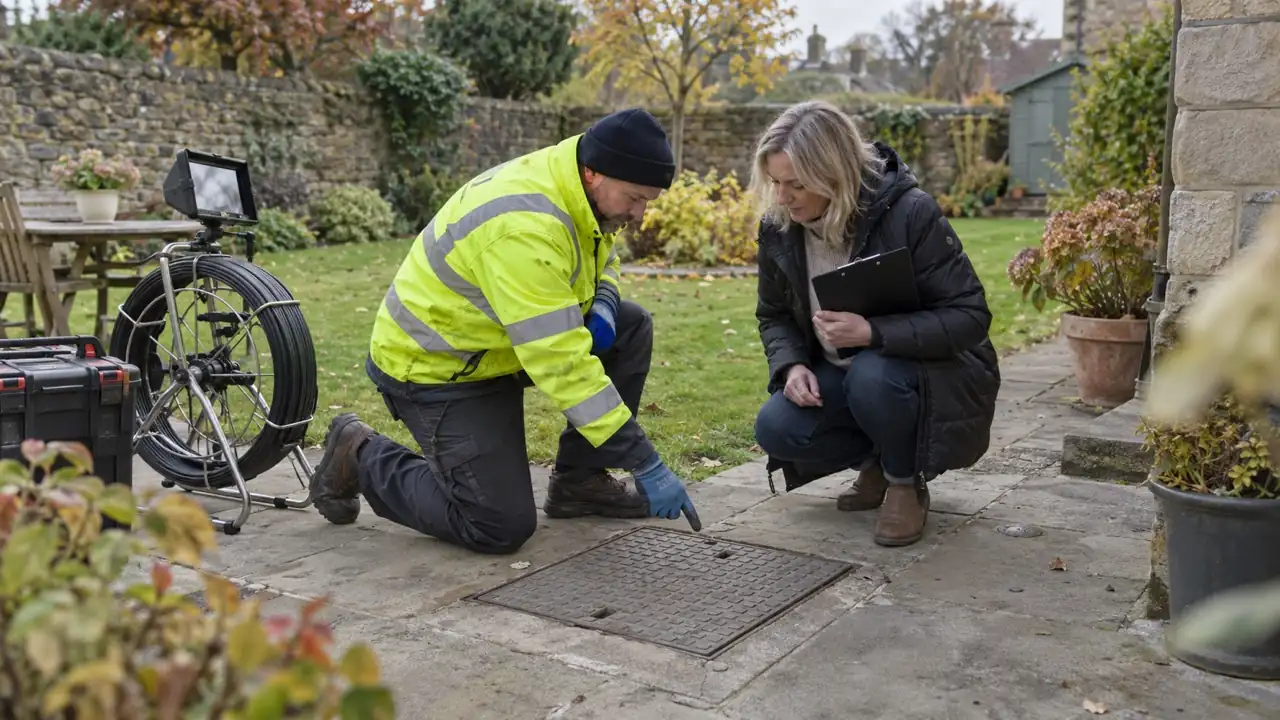
Avoid unsupported claims
Ratings, accreditations, response times and guarantees can change. Verify important claims with the contractor or the organisation said to provide the accreditation.
Verify the business behind the quotation
Directory pages, trading names and advertising numbers can obscure which legal business will perform the work. Ask for the invoicing name, business address and the person responsible for the job before paying a deposit or authorising major work.
- Check current reviews across more than one source
- Verify claimed memberships with the scheme itself
- Ask for appropriate insurance evidence
- Confirm waste-carrier arrangements where waste is removed
- Keep written estimates, footage and invoices
Compare evidence as well as price
For unblocking
Confirm what equipment and time are included, whether the pipe will be cleaned, and what happens if the obstruction cannot be reached.
For a CCTV survey
Agree which runs will be surveyed and whether video, still images, a written report, mapping or defect coding is included.
For a repair
Ask to see the defect, its location, the proposed method, alternatives considered and the reinstatement included in the price.
Be cautious with high-pressure sales
An active overflow may need prompt clearance, but that does not remove the need to agree additional repair work. Take time to review evidence for excavation or relining and obtain another opinion where the scope or price is substantial.
A simple contractor-checking process
1. Define the problem
Write down the affected drains, history and outcome required. This makes it easier to compare whether each contractor is quoting for the same scope.
2. Verify the supplier
Check the legal or trading identity, contact details, insurance and any claimed scheme membership. TrustMark status, where claimed, should be checked on the current official register.
3. Compare deliverables
For a survey, compare inspected runs and reports. For clearance, compare time and equipment. For repair, compare evidence, materials and reinstatement.
4. Retain the record
Keep the accepted quotation, variations, footage and invoice. Do not rely solely on a telephone description of a major defect or guarantee.
Reviews and directory listings
Reviews can show recurring themes but can be outdated, incomplete or connected with a different branch or trading name. Check dates, detail and how the business responds to criticism, and do not treat a directory's presence as proof of technical competence.
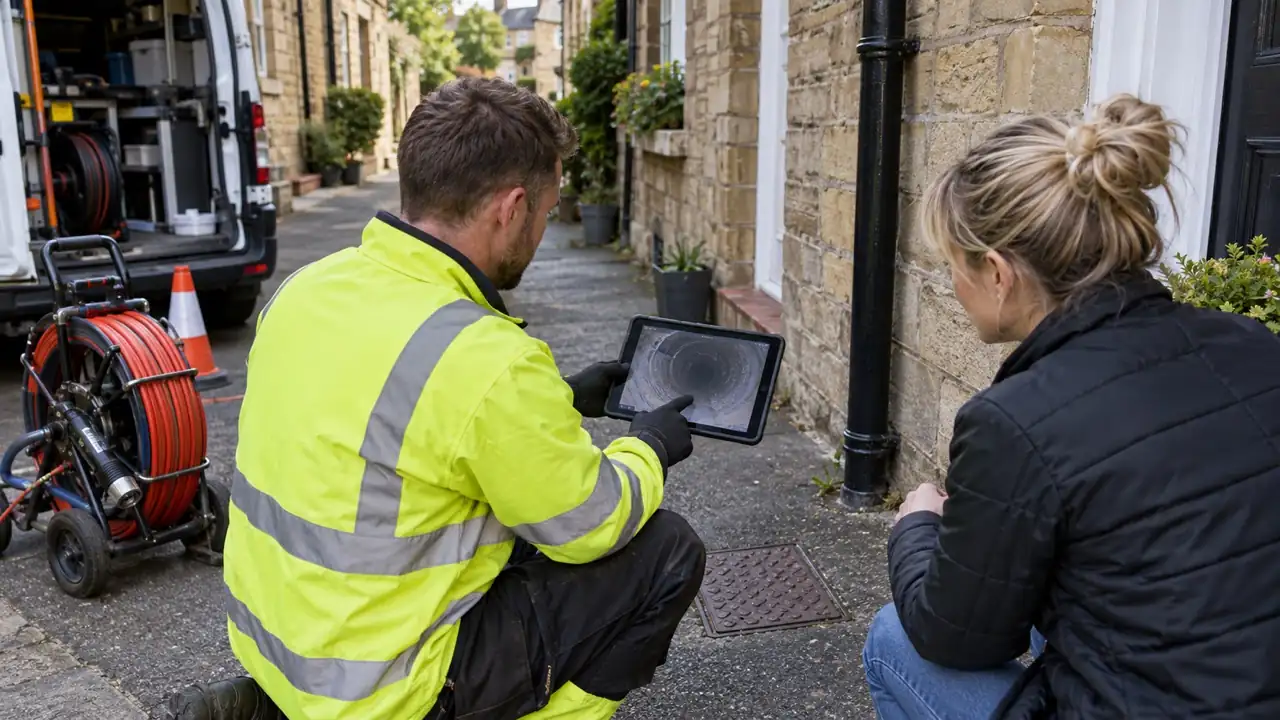
Compare a defined scope, not a headline claim
For drain clearance
Check which access point, equipment, working period and flow test are included. Opening a narrow route through an obstruction is not necessarily the same as cleaning a longer deposited pipe or investigating why the problem returns.
For CCTV inspection
Agree the runs to be surveyed, whether pre-cleaning is included and what records will be supplied. Live commentary, video files, stills, a sketch and a formal condition report are different deliverables.
For structural repair
The quotation should reference the confirmed defect, repair length, material, access, connections, testing and reinstatement. Ask how variations will be approved if the conditions differ from the initial footage.
Records that support accountability
Keep the supplier’s trading identity, accepted quotation, changes, attendance record, footage, photographs and invoice together. If a scheme membership, insurance, guarantee or waste registration affects the decision, verify that item with the relevant organisation and retain the current evidence.
For commercial sites, note working hours, inductions, permits, traffic routes and hygiene controls. A clear drainage-zone plan and labelled chambers can reduce investigation time and make planned maintenance comparable from one visit to the next.
Questions to ask before accepting the work
What result is included?
Confirm whether the task ends with flow restored, pipe walls cleaned, footage supplied, a written report completed or surfaces reinstated. Those outcomes involve different time, equipment and evidence.
How are extra findings handled?
A quote should explain which changes need approval and who can authorise them. A newly visible defect after cleaning may justify a separate proposal, but it should not automatically expand the original scope.
What happens if access is unavailable?
Locked areas, buried covers, traffic restrictions and missing plans can change the work. Establish whether another access point, tracing or preparatory work would be quoted separately.