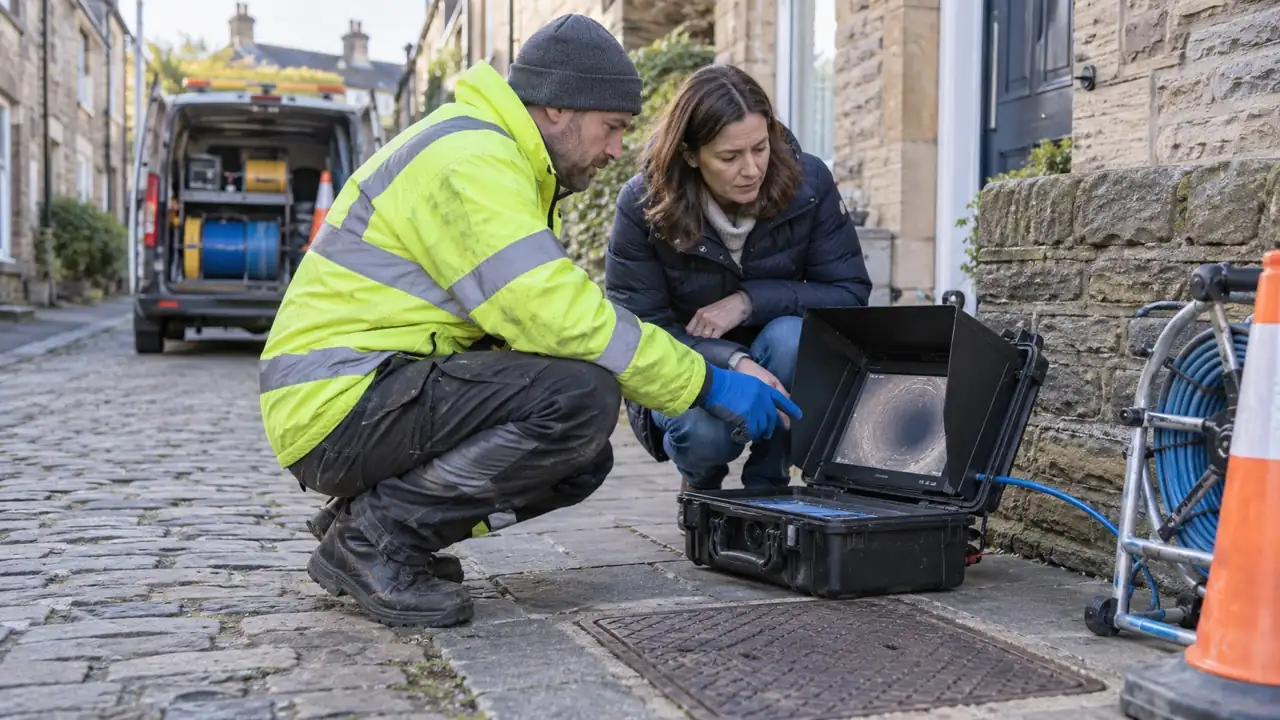
What a CCTV drain survey is for
A CCTV survey records the visible interior of accessible drainage pipes. It can help investigate repeated blockages, suspected defects, unexplained smells, leakage, property work or the condition of a completed repair.
The survey should begin with a defined question and agreed scope. A short inspection of one problem run is different from mapping several drains for a purchase, extension or commercial maintenance plan.
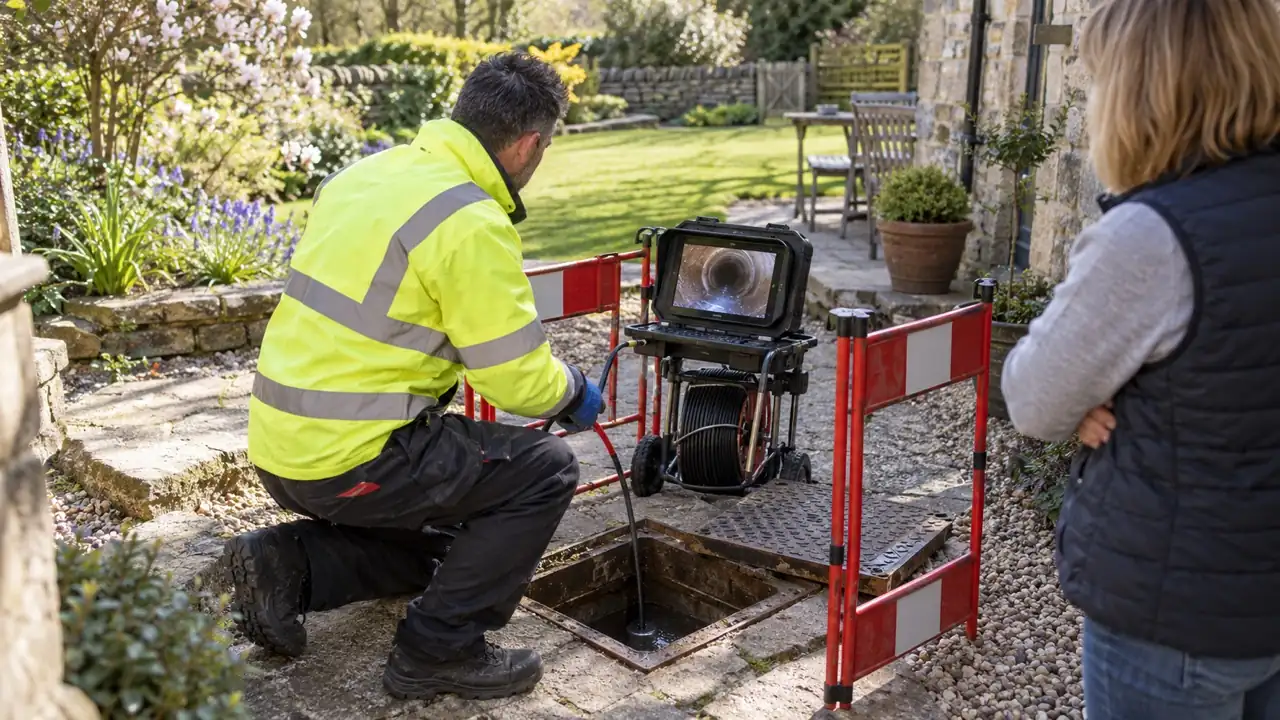
What can be identified
- Accumulated grease, silt, scale and other deposits
- Roots entering through a joint or damaged section
- Cracks, fractures, open or displaced joints
- Deformation, local collapse and standing water
- Intruding connections or poorly finished repairs
- The visible condition before and after repair work
The camera can only show the route it reaches. Water, debris, tight bends, diameter changes and physical damage can obstruct the view, while the footage cannot establish ownership or ground conditions outside the pipe.
The drain-survey process
Define the route
Symptoms, chamber positions and any plans are reviewed to identify the drains that need inspection and the safest access point.
Clear and clean where necessary
An obstructed or heavily deposited drain may need clearance before the camera can provide useful evidence. Cleaning requirements should be agreed as part of the scope.
Record the accessible pipe
The camera is guided along the drain and relevant features are recorded. Distance, direction and a surface reference make a defect easier to locate if follow-up work is needed.
Report the findings
Deliverables can range from a live explanation and video to still images, a written condition summary, a sketch or a coded report. Confirm what is required before the survey begins.
Property purchases, extensions and repairs
A buyer may use CCTV evidence to understand accessible private drains alongside the wider building survey and legal searches. For an extension, Yorkshire Water’s sewer records and build-over requirements may be relevant where a public sewer is nearby.
Before drain relining in Leeds or excavation is approved, footage should show the defect, its position and the condition of the surrounding pipe. Post-repair inspection can then document the treated section and reopened connections.
Choosing the right survey scope
Explain whether the property is a house, flat, rented building, commercial site or development project. Identify the affected fixtures, known access points, earlier blockages and any report format needed by a buyer, insurer, contractor or other professional.
A useful survey does not simply produce video. It connects the footage with the drainage route, explains the significance of visible findings and separates confirmed defects from limitations or matters that need another form of investigation.
Survey reports and deliverables
Before work begins, agree whether you need a live explanation, recorded video, still images, a written summary, a sketch, measured defect positions or a formal coded report. Property buyers, insurers and construction professionals may require information that is not included in a basic diagnostic inspection.
The report should identify the surveyed access point and direction, describe any uninspected runs and distinguish an observation from a repair recommendation. Retain the original files with the property’s maintenance documents.
Limitations that should be recorded
- A camera can inspect only an accessible route
- Standing water and deposits can conceal the pipe wall
- Tight bends and diameter changes can stop the camera
- Footage does not establish legal ownership of a sewer
- Ground conditions outside the pipe need other evidence
- A survey reflects visible condition at the time recorded
Where these limitations affect the original question, the next step may be cleaning, a different access point, tracing, sewer records or another form of investigation rather than an unsupported conclusion.
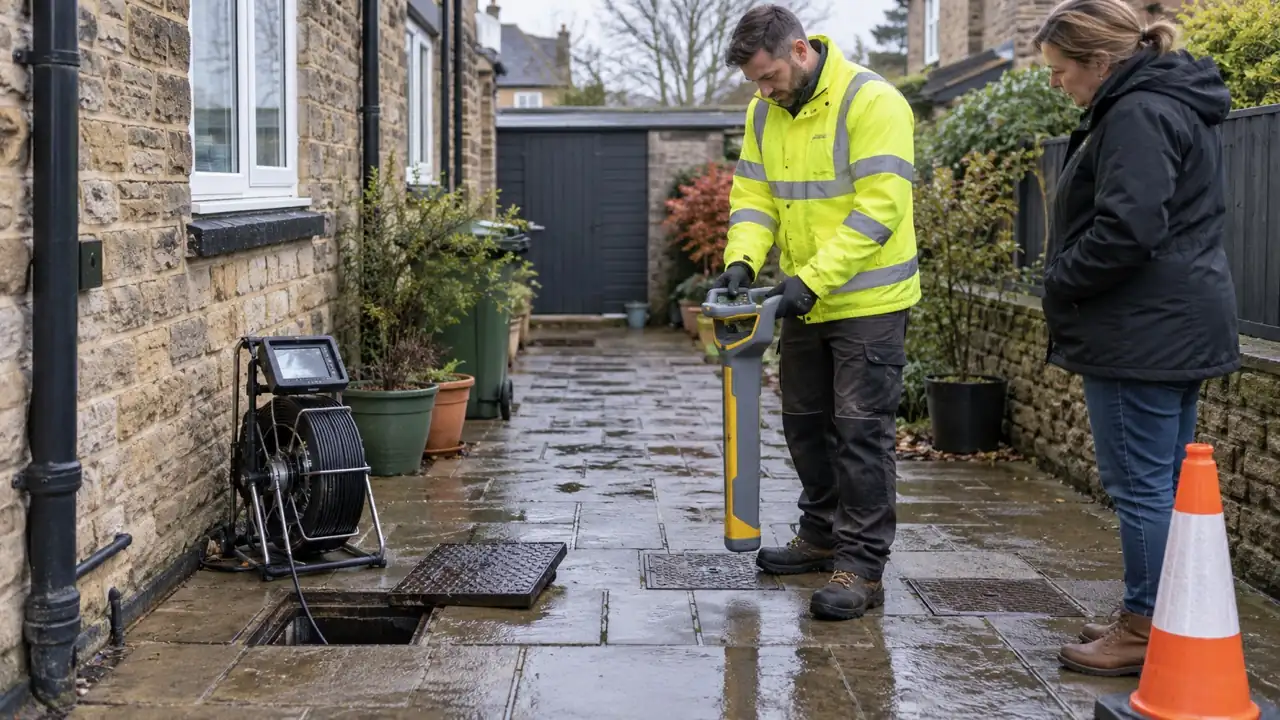
Types of CCTV drain-survey camera
Push-rod inspection camera
This is the common approach for many domestic and smaller commercial drains. A waterproof camera head and lights are attached to a semi-rigid cable that the operator feeds from a chamber or suitable access point. The head and cable must match the pipe diameter, bends and distance to be covered.
Self-levelling camera head
Self-levelling systems keep the image upright as the camera rotates within the pipe, making footage easier to interpret and present. They improve orientation but cannot see through standing sewage, heavy grease, scale or an uncleared blockage.
Pan-and-tilt camera
A pan-and-tilt head can turn to inspect the pipe circumference, a connection or a feature from more than one angle where pipe size and access permit. This can be useful for larger drains and detailed condition work, though physical restrictions still set the inspection limit.
Tracked crawler unit
A motorised crawler carries the camera through larger, straighter pipes and can provide stable progress over a longer run. It requires a pipe large and regular enough for the unit and is not automatically the best choice for small domestic networks or frequent tight bends.
Other tools used with drainage cameras
Lighting, recording and distance counters
Adjustable lighting is needed to show the pipe wall without washing out the image. Recording equipment preserves video and still frames, while a calibrated cable counter references features by distance from the access point. File labels should retain the date, run and direction.
Sonde and surface locator
A compatible camera head can transmit a signal that a locator detects above ground. This helps estimate the position and depth of a defect, change of direction or lost route. Readings have tolerances and should be treated as one part of excavation planning, not a guarantee that no other service is present.
Drain-cleaning equipment
Jetting and mechanical tools may be used before the survey to restore access and remove deposits that hide defects. Cleaning changes the scope and should be agreed in advance. The report should state whether the footage shows the pipe before or after cleaning.
Tracing and testing methods
Dye, flow testing, plans and observations at chambers can help establish connections that the camera cannot enter. A public-sewer plan shows recorded infrastructure, while a camera shows only the route reached on the day; the two forms of evidence complement rather than replace each other.
Survey applications and the evidence each one needs
Recurring blockages
The survey should follow sufficient clearance and inspect the repeated problem position plus surrounding pipe. Deposits, roots, displaced joints, deformation and poor visible flow can then be considered against the blockage history.
Preventative maintenance
A baseline survey can identify critical runs and visible risks before a failure interrupts a business or multi-occupancy property. Follow-up timing should be based on use, deposit rate, previous findings and consequence rather than a generic interval applied to every drain.
Homebuyer and property investigations
A buyer may request footage, a plan and written findings for accessible private drainage. The scope should state exclusions and does not replace conveyancing searches, a building survey or official sewer records. Any repair recommendation should be linked to a located visible defect.
Extensions, conversions and new work
Surveying can document existing accessible drains, investigate routes and check a completed connection or repair. Where a public sewer is close to the work, Yorkshire Water’s records and build-over requirements remain relevant regardless of the private survey findings.
Insurance and repair evidence
Insurers and other professionals may require a specific report format, defect coding, plan or file record. Confirm that requirement before attendance. A short diagnostic video made for live explanation may not contain the information a third party later expects.
Designing a preventative drain-survey programme
Identify consequence and likelihood
Prioritise drains whose failure would affect hygiene, residents, production, stock, access or the environment. Then consider blockage history, grease or silt loading, roots, known defects and difficulty of emergency access. This creates a risk-based list rather than an arbitrary inspection calendar.
Choose repeatable survey routes
Name the access points, direction and end point for every critical run. Keep a simple plan and consistent filenames. A later operator can then compare like with like and identify whether a deposit, root entry or fracture has changed.
Set action thresholds
Define what leads to cleaning, closer monitoring or repair assessment. Minor observations can remain on record, while a worsening restriction or structural defect may justify further work. Thresholds keep maintenance proportionate and make decisions auditable.
Review the programme after change
Occupancy, catering activity, construction and altered site drainage can change loading or remove access. Update the map, baseline and schedule after those changes rather than relying on a plan prepared for a different use of the property.
What a useful CCTV drain-survey report contains
- The property, survey date and purpose
- Access-point names and direction of travel
- Runs requested, completed and not reached
- Pipe size, material and use where established
- Measured observations and selected still images
- Video files clearly matched to the written record
- Limitations such as water, deposits, bends or unavailable access
- Recommendations proportionate to the visible findings
A basic survey may not include every item. The right level depends on whether the client needs an immediate diagnosis, a property record, maintenance baseline, repair design or third-party evidence. Agree the deliverables before work so the operator records the right information during the inspection.
Frequently asked questions about CCTV drain surveys
Can a survey see the entire drainage system?
Only accessible routes reached by the equipment are inspected. Tight bends, small branches, standing water, blockages, diameter changes and missing access points can leave sections unseen. Those exclusions should be recorded.
Will the camera locate the exact repair position?
Distance measurement and a sonde can provide useful surface references, but readings have tolerances. Excavation planning must also consider pipe route, depth, access, ground conditions and other buried services.
Does every crack need relining?
No. The severity, position, pipe shape, leakage evidence and effect on serviceability matter. The response could be monitoring, local repair, a longer liner or excavation. The recommendation should explain why it is proportionate.
Should the drain be cleaned first?
Cleaning is often necessary when deposits or sewage prevent a condition view. For a pre-cleaning blockage investigation, initial footage may still be useful, but a post-cleaning pass is normally needed to examine the pipe wall behind the obstruction.