Different drainage symptoms need different investigations
One slow sink, bath or shower
An isolated slow fixture often points to its strainer, trap or short waste pipe. Hair, soap, grease and food residue can accumulate close to the fitting. If the rest of the property drains normally, safe local checks may be more appropriate than starting with underground drain equipment.
Several fixtures gurgling or backing up
When a toilet changes level as a sink empties, or water rises in a shower when another fixture is used, the restriction may be after those branches join. Stop adding water once the pattern is clear. The lowest connected fixture is often the first place wastewater escapes.
An external chamber holding water
A surcharged private chamber can help locate the restricted section. Safe, accessible chambers may show the last point receiving flow and the first point that does not clear. Covers should not be forced, and nobody should enter or lean into a chamber or tank.
The same drain blocking again
Repeated clearance without a recorded cause can leave grease, roots, an open joint, deformation or poor flow conditions unexplained. After the pipe is opened and cleaned, a CCTV drain survey can document the accessible pipe wall and support a proportionate repair or maintenance decision.
Drain-clearance, camera and repair equipment
Manual and mechanical clearance
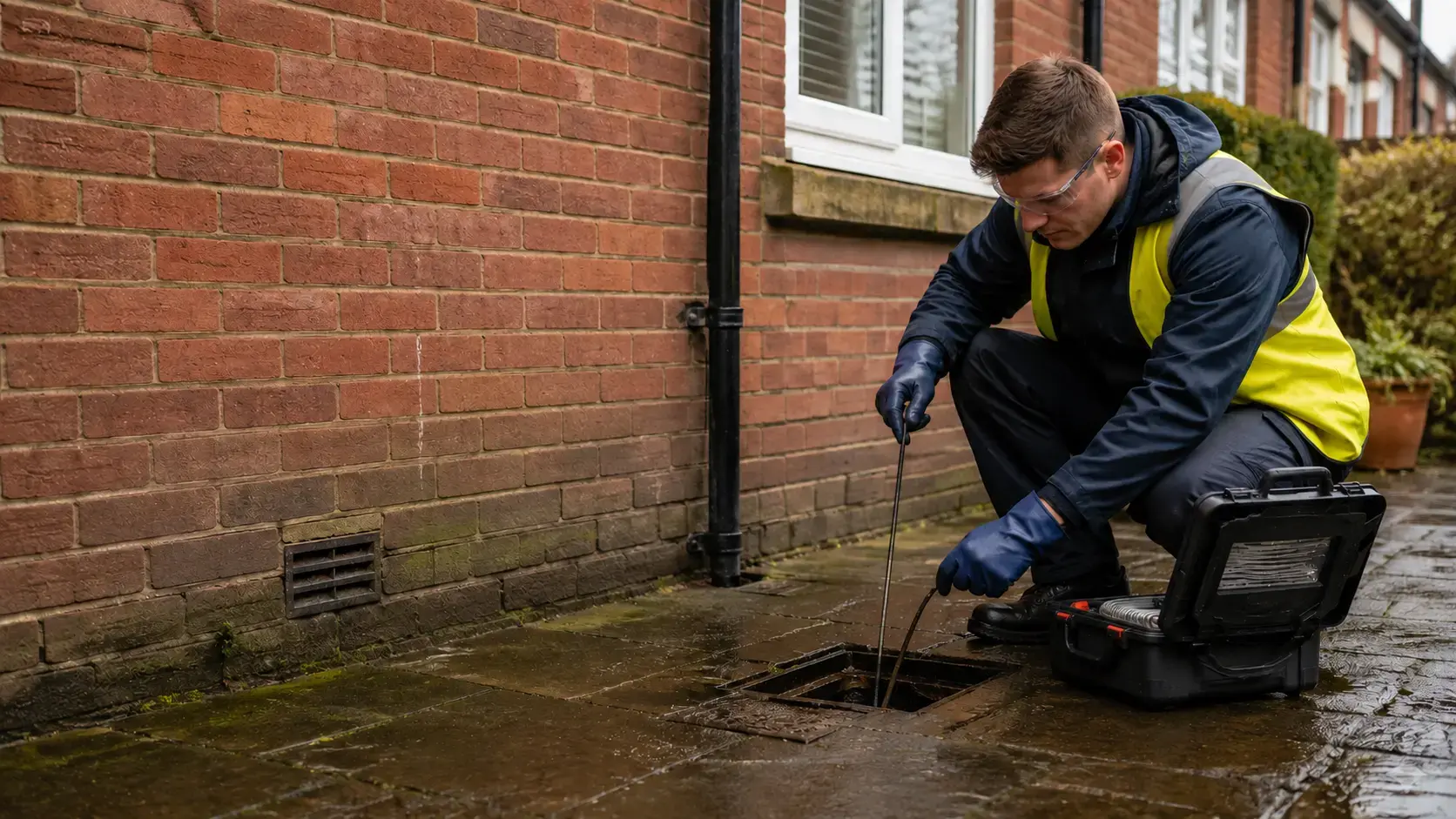
Rods, plungers and mechanical cables can address some reachable obstructions, but they depend on the route and pipe condition. Resistance at a bend, displaced joint or collapsed section should not simply be overcome by force because equipment can become lodged or worsen existing damage.
High-pressure water jetting
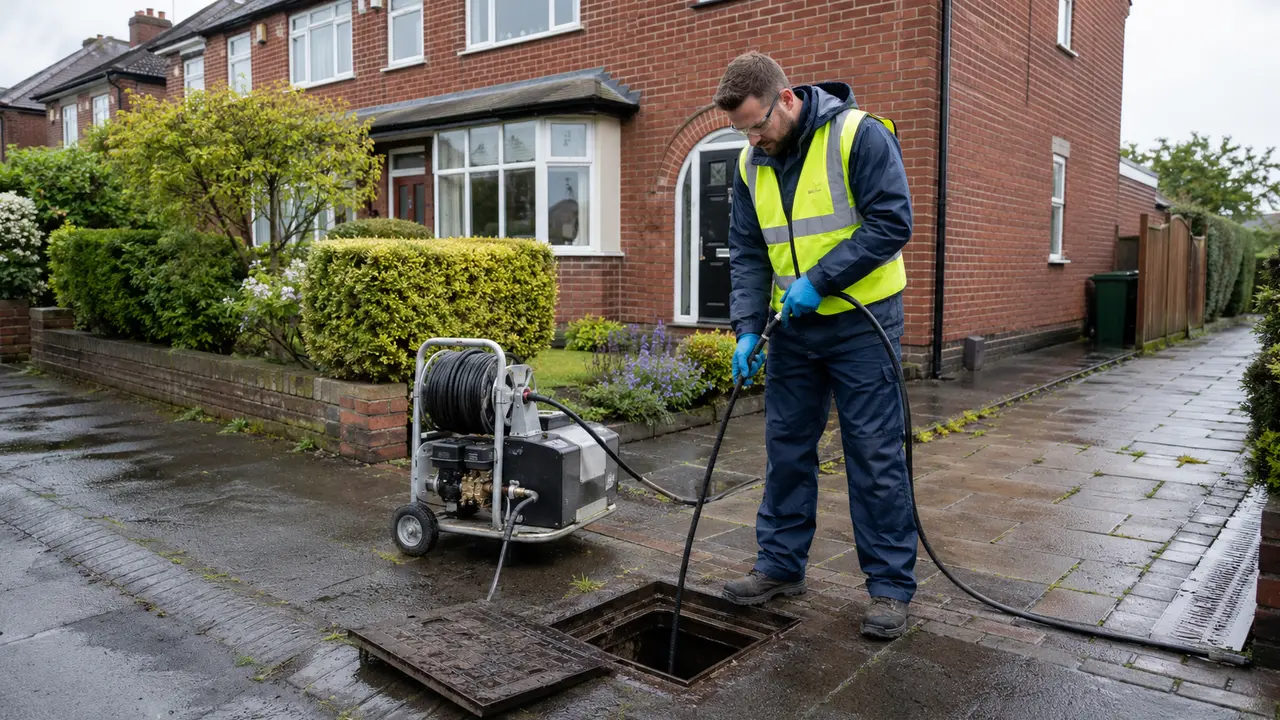
Jetting uses controlled water flow and an appropriate nozzle to penetrate, flush or clean deposits in suitable pipework. Grease, silt, loose scale and some root growth can require different nozzles and techniques. The operator must consider material, diameter, access and where loosened debris will travel.
CCTV cameras and locating tools
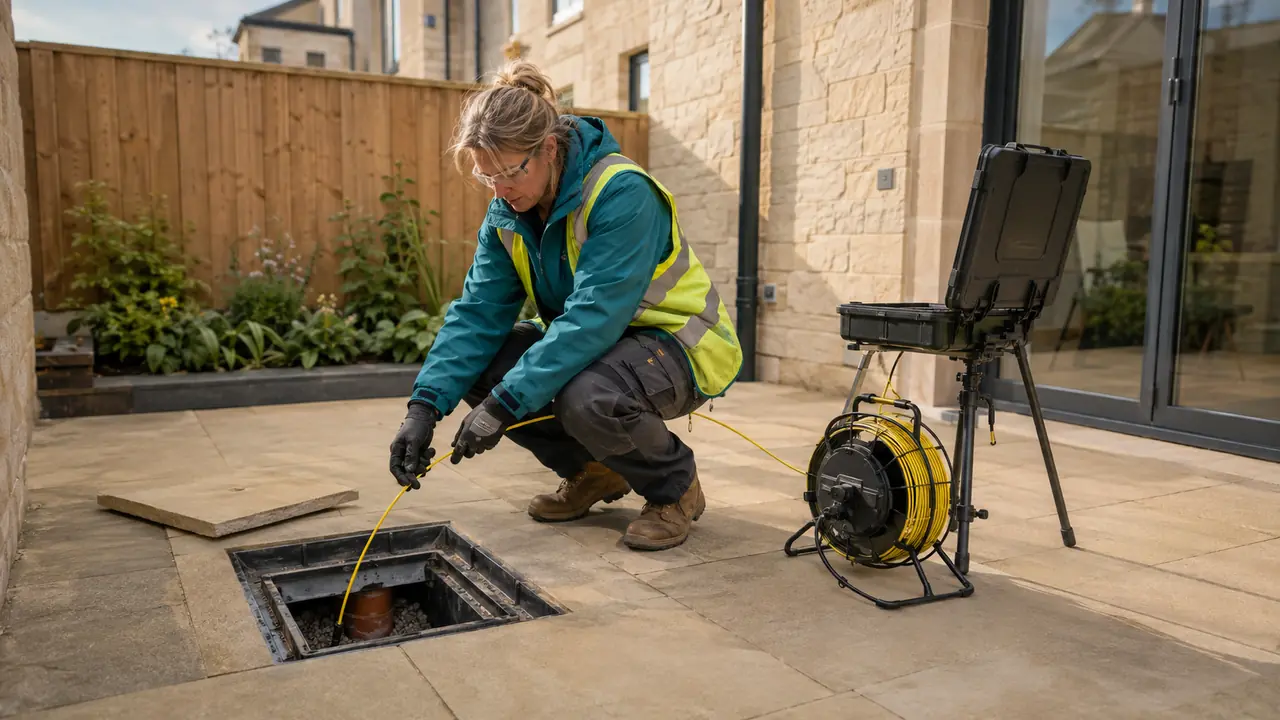
Push-rod cameras suit many smaller drains, while crawler and pan-and-tilt systems can serve suitable larger pipework. Distance counters and transmitting sondes can help reference a visible feature from the access point and estimate its surface position. The report should record limits such as standing water, bends and uninspected branches.
Patch, liner or excavation
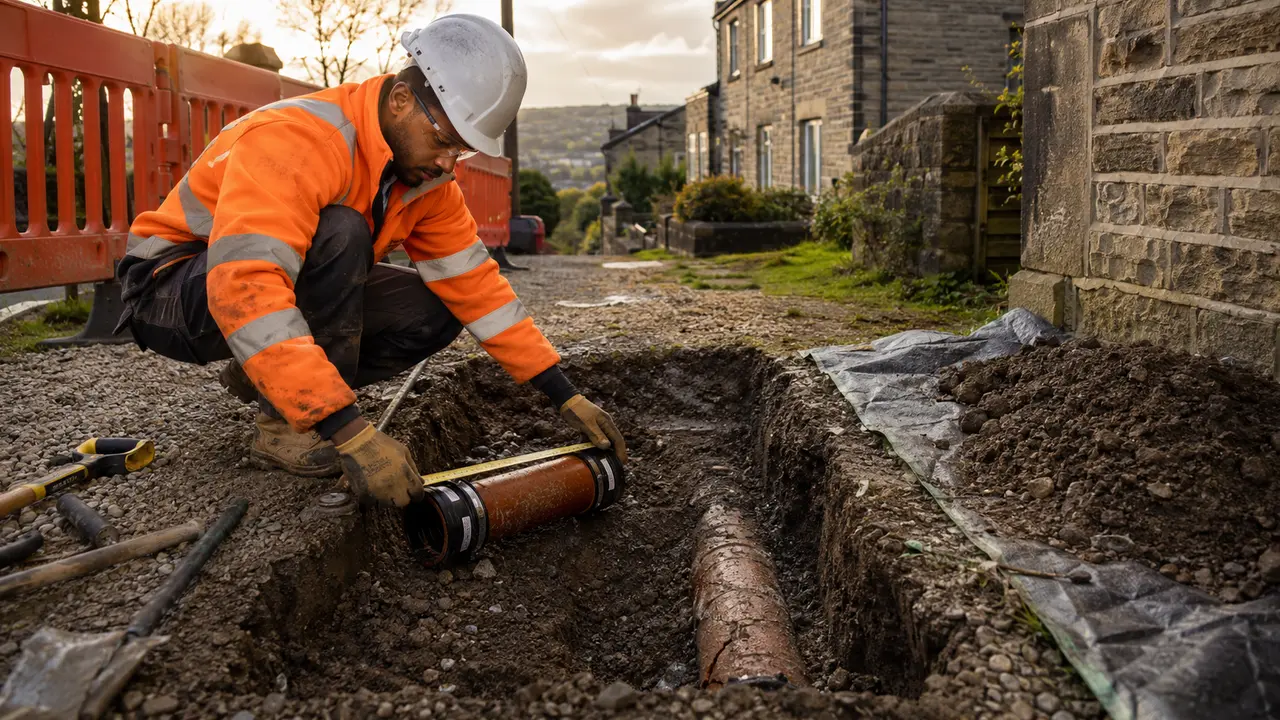
A local patch may reinforce a suitable isolated defect; a longer structural liner can rehabilitate an appropriate section; excavation may be required for severe deformation, collapse or a change of route or level. The drain-repair guide explains why the choice should follow inspection evidence.
Preventative maintenance built around the property
Homes and rented property
Keep fats, food particles, wipes and sanitary products out of drains, use strainers and keep private chamber covers accessible. Landlords and managing agents should retain earlier clearance, survey and repair records and identify which units are affected when a shared internal or underground line has symptoms.
Commercial kitchens and busy washrooms
High-use premises benefit from labelled drainage zones, written disposal rules and records of material removed. Maintenance should be based on use, blockage history and consequence of failure rather than an arbitrary interval that treats every line the same.
Rainwater and outdoor drainage
Leaves, soil and gravel can be removed from private gullies at surface level without washing them into the underground pipe. Road-edge gullies are reported through Leeds City Council. Building materials, concrete washout and landscaping debris should be kept away from foul and surface-water drains.
When comparing quotations or checking what evidence should accompany specialist work, use the guide to choosing a drainage company in Yorkshire. It explains how to compare a defined scope, records and verification rather than relying on a headline claim.
Private drains, shared sewers and official records
Responsibility depends on where the pipe runs and which properties it serves; it is not decided only by the position of the first overflow. If several homes are affected or sewage appears to be escaping from a public section, check Yorkshire Water’s pipe-responsibility guidance before commissioning private work.
For extensions or work close to a sewer, available pipe and sewer records and the official build-over process may be relevant. For a blocked highway gully, use Leeds City Council’s drains and gullies route. These sources provide ownership and area context; they do not diagnose the condition of an individual private drain.