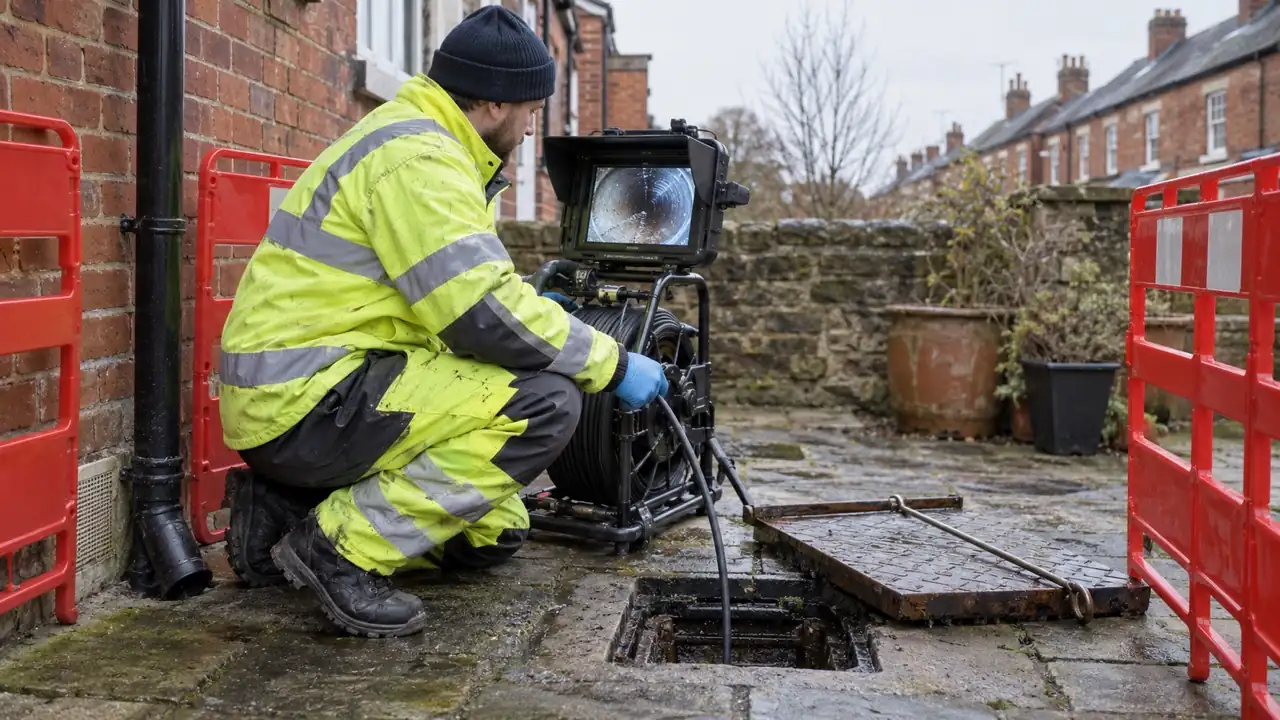
What drain unblocking covers
Drain unblocking is the process of restoring flow through an obstructed waste or surface-water pipe. The first task is to establish whether the problem is confined to a trap or short waste pipe, lies within a private underground drain, or appears to affect a shared or public sewer.
Common causes include fats and food residue, hair and soap, wipes, sanitary products, scale, silt, building debris, roots and damaged joints. Different causes can create similar symptoms, which is why access points and the pattern of affected fixtures matter.
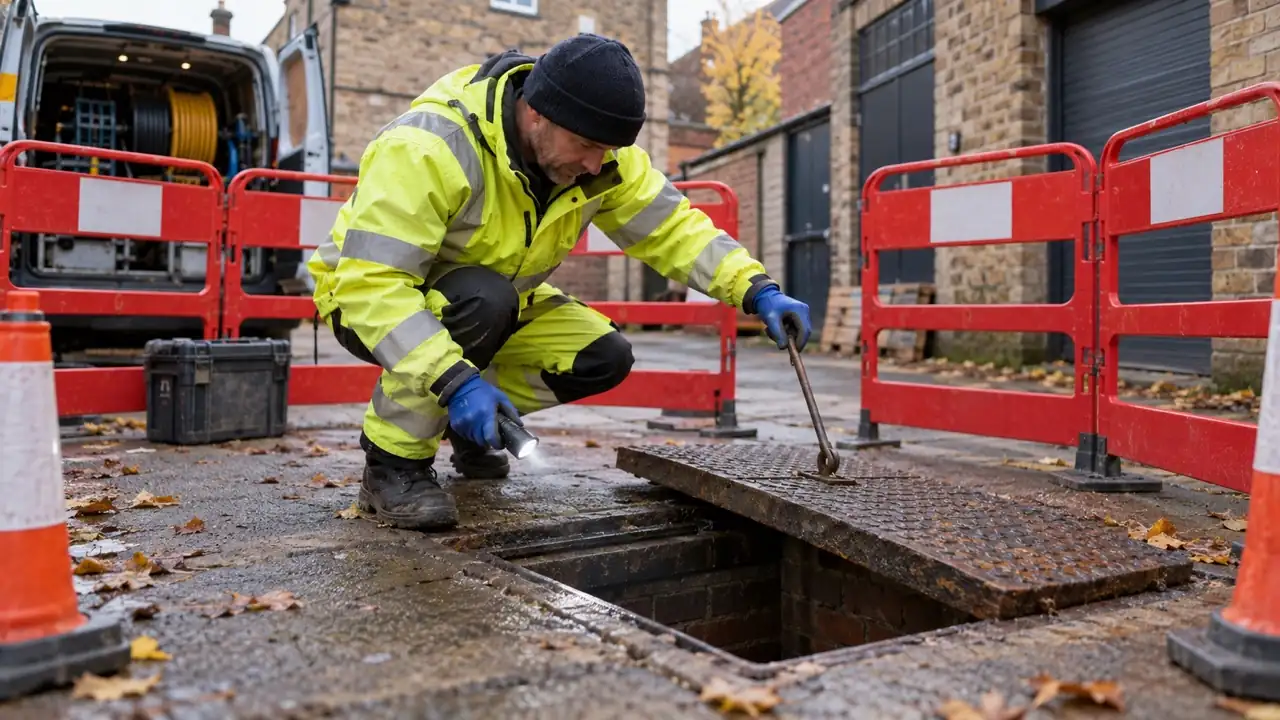
Warning signs of a blocked drain
- Water draining slowly from a sink, bath or shower
- Gurgling as another fixture is used
- Wastewater rising in a toilet, shower or floor gully
- Persistent smells from traps or external chambers
- A chamber holding water or overflowing
- The same section blocking after earlier clearance
Stop using affected fixtures if water is backing up. Continued flushing or appliance discharge can force more wastewater into a restricted system and increase contamination.
Clearance, cleaning and investigation
Drain rods
Rods can reach some obstructions through an appropriate chamber. They are most useful when the pipe route is understood and should not be forced through unknown bends or damaged pipework.
High-pressure water jetting
Jetting uses water and a selected nozzle to move deposits and clean suitable pipe walls. Pressure and technique must take account of pipe condition, diameter, direction of flow and the material being removed.
CCTV drain inspection
A camera may be used after access and visibility are restored, particularly when a blockage returns or damage is suspected. The findings can support cleaning, monitoring or repair decisions but should be explained in relation to the symptoms.
Repairing a damaged section
Cracks, open joints, deformation and collapse may require a local patch, lining or excavation. A repair should address a recorded defect; it should not be recommended solely because a drain was blocked.
Private drains, shared sewers and highway gullies
Responsibility depends on where the pipe is and which properties it serves. Yorkshire Water provides guidance on private drains, lateral drains and public sewers. Leeds City Council manages highway gullies on adopted roads, while gullies and drains on private land generally remain separate.
If several properties are affected, or sewage appears to be escaping from the public network, check the official reporting routes before commissioning private work. A road-edge gully that floods during rain is not automatically connected to a blockage within a nearby house.
Preventing avoidable blockages
Keep fats, wipes, sanitary products, food particles, mortar and garden debris out of drains. Use strainers where appropriate, clear private gullies at surface level and keep chamber covers accessible. For commercial kitchens or high-use washrooms, written disposal procedures and recorded maintenance can help identify recurring patterns.
Where a drain repeatedly blocks, save previous invoices, survey footage and repair records. A history can reveal whether the same section is involved and whether the pipe was opened, fully cleaned or repaired.
What to provide before attendance
A clear description helps determine what access and equipment may be required. Explain where wastewater first appeared, whether it is still rising, which fixtures are safe to use and whether the same drain has been worked on previously.
- The complete postcode and type of property
- Every affected sink, toilet, appliance, gully or chamber
- Whether neighbouring properties report similar symptoms
- The location of accessible private chamber covers
- Any chemical cleaner, rod or other tool already used
- Parking, gate, key or commercial-site restrictions
Drainage needs vary by property
Homes and landlords
A single household fitting may need local plumbing work, while several affected rooms can point to the underground drain. Landlords should record which tenants and units are affected and retain the history of earlier work.
Restaurants and commercial kitchens
Fat, oil, food residue and heavy use can create a different cleaning requirement from a household blockage. Explain any grease-management system and when the affected line can be taken out of use.
Offices, retail and industrial sites
Identify the affected building, process or drainage zone. A site plan and chamber labels can help separate foul, trade and surface-water runs and make later maintenance easier to record.
Off-mains property
A full septic tank, blocked inlet, failed outlet and saturated drainage field can produce overlapping symptoms. Confirm the system type before arranging standard drain clearance.
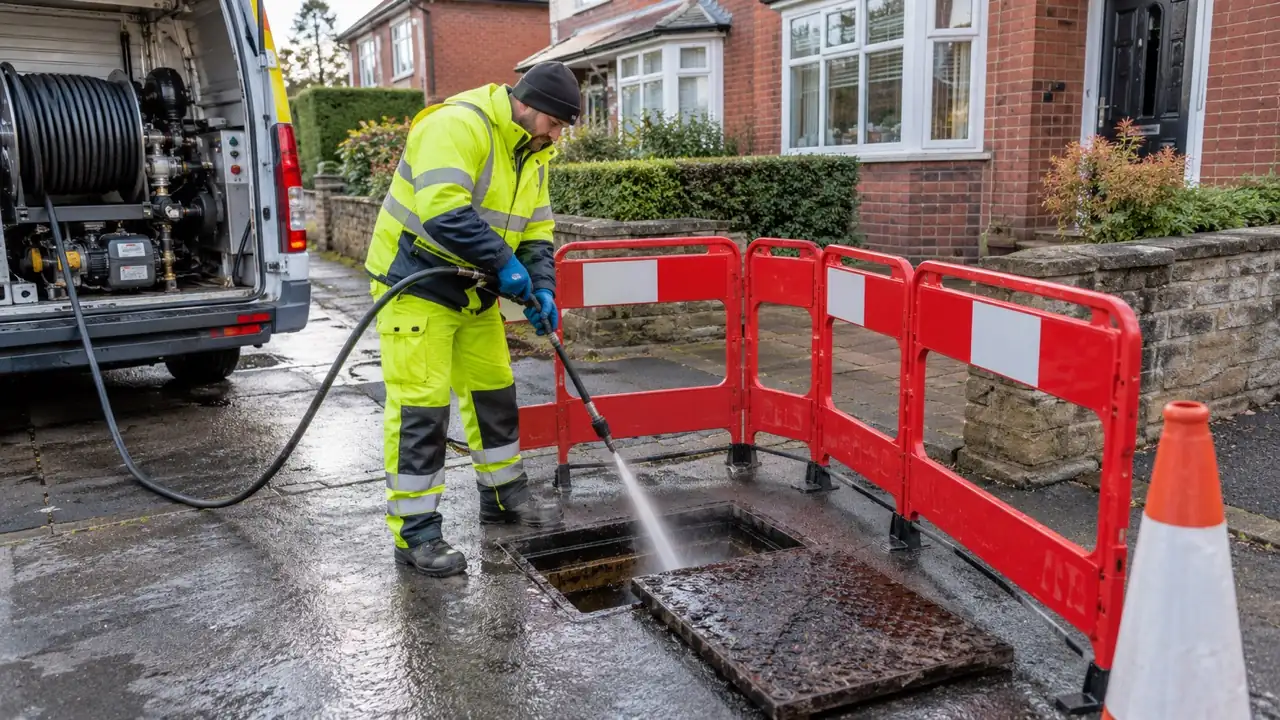
How the affected part of the drainage system changes the job
Trap and short waste pipe
A restriction beside one sink, bath or shower may be reachable through an accessible trap or with a fixture-specific tool. If every other fitting drains normally, underground jetting may not be the first sensible step. Grease, hair, soap and food residue are common in these smaller pipes.
Soil stack and building drain
Toilets, basins and other fixtures can join a common vertical stack or underground building drain. Gurgling between fittings and wastewater rising at the lowest outlet suggest the restriction may be beyond one appliance. Access and the route must be established before rods or mechanical cables are introduced.
Private underground drain
A private run may connect several chambers before reaching the boundary. Rodding, water jetting and camera inspection are normally undertaken from a suitable access point. Bends, changes in diameter, material and condition influence which equipment can travel safely.
Shared lateral drain or public sewer
A pipe serving more than one property, or lying beyond the property boundary, may fall within Yorkshire Water’s responsibility. Ownership is not decided by who first sees the overflow. The official pipe-responsibility and sewer-flooding sources below explain the appropriate checks and reporting routes.
A step-by-step drain-clearance workflow
1. Control the immediate risk
Stop water use where sewage is backing up, isolate the working area and keep people away from contamination. Establish whether the problem is active, whether electrics or vulnerable areas are threatened and whether a public-sewer report may be needed.
2. Trace the symptoms
Record the first affected fitting, all related symptoms and the level in safe, accessible chambers. An empty upstream chamber and surcharged downstream chamber can help identify a working section without unnecessary intervention in unaffected pipes.
3. Open and remove the restriction
The operator selects an access point and method appropriate to the likely material. Rods may break a reachable obstruction; jetting can move and clean deposits; mechanical cutters can address suitable roots or hard material. Removed debris and downstream consequences need to be considered throughout.
4. Clean, test and decide whether to inspect
Restored flow is checked through the affected system. Where heavy deposits remain or the problem has happened before, further cleaning can expose the pipe wall for CCTV. A one-off removable obstruction may need no camera, while a recurrence needs a clearer explanation.
Blockage material and the method used
Grease and organic deposits
Fat can form a tenacious layer rather than a single plug. Water flow, nozzle choice and debris control matter because punching a narrow hole may give only temporary relief. Commercial kitchens should review disposal and grease-management arrangements after the line is cleaned.
Wipes, paper and foreign objects
Non-dispersing items can snag on an existing joint, root or deposit. Retrieving the material may be preferable to pushing it onward. Where the same location repeatedly catches normal waste, the pipe condition should be inspected after clearance.
Silt, gravel and building debris
Surface-water runs and site drainage can fill from gullies, landscaping or construction activity. Jetting may suspend loose material, but recovery and disposal may be needed so it is not transferred to another chamber or the public network.
Roots and structural restriction
Cutting roots restores space but leaves the entry route unless the underlying defect is addressed. A cleaned camera view can identify the joint or fracture and help decide whether monitoring, a patch, lining or excavation is proportionate.
Planned maintenance for homes and businesses
Maintenance should respond to an actual risk rather than a universal calendar interval. A low-use domestic drain with no history differs from a restaurant line, a busy washroom, a tree-affected joint or a yard collecting silt. Start with the blockage and cleaning record, then decide which runs justify planned attention.
- Label important chambers and drainage zones
- Record the material found and equipment used
- Define whether the task is opening, cleaning or inspection
- Keep disposal and grease-management procedures current
- Review the plan after building or occupancy changes
- Escalate repeated problems to condition investigation
For landlords and managing agents, records should identify the affected unit and shared section. For commercial premises, the plan should also consider operating hours, hygiene controls and the consequences of taking each drain out of service.
Frequently asked questions about drain unblocking
Is a drain open as soon as the water level falls?
Not necessarily. A small route through grease, scale or roots may lower the level while leaving a substantial restriction. A flow check and, when justified, further cleaning or inspection can establish whether the result is likely to be durable.
Are chemical drain cleaners suitable for outside drains?
They are not a reliable answer to an underground obstruction and may remain trapped in contaminated water. Never mix products. Tell the operator what has been used so exposure and equipment choices can be managed safely.
Who deals with a road gully?
Leeds City Council provides the reporting route for blocked highway gullies. A private gully inside a property and the underground drain connected to it are different assets, even if surface water appears in the same area.
What should happen after a repeat blockage?
Compare previous locations and methods, clean the affected section sufficiently for visibility and consider a CCTV survey. The aim is to identify whether maintenance deposits, roots, poor flow or a structural defect explains the recurrence.