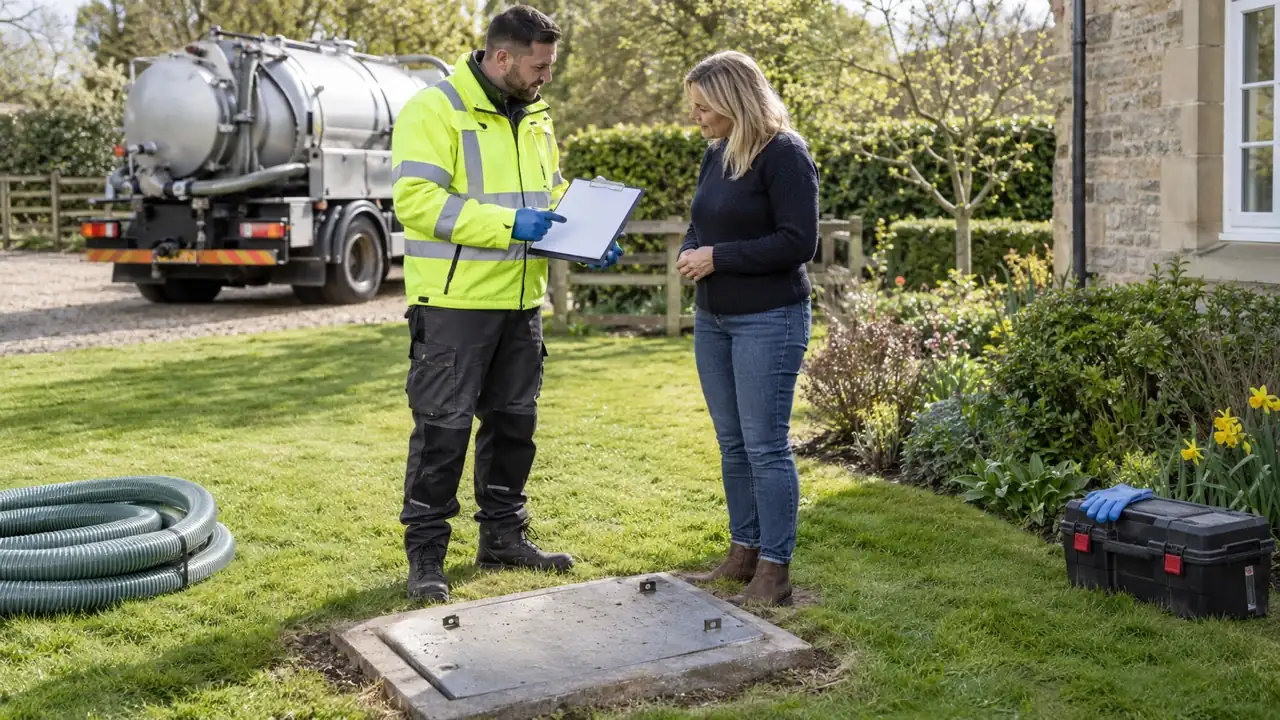
Information to have ready
- System type and approximate capacity
- Location of covers and safe vehicle access
- Date of the last emptying
- Any alarms, smells, backups or wet ground
- Known outlet or soakaway problems
Do not enter the tank
Septic tanks are confined spaces containing dangerous gases. Never enter a tank or lean into an open access point.
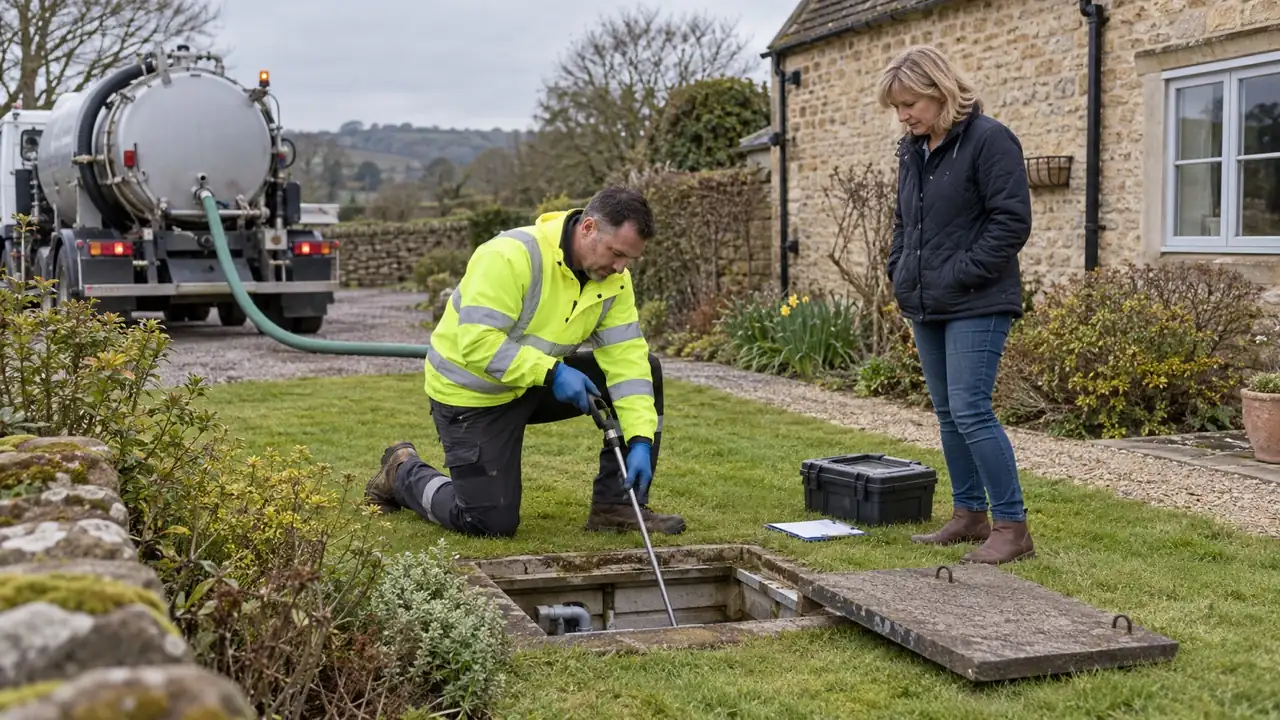
Emptying is not always the whole solution
Rapidly returning levels, alarms or wet ground can indicate an outlet, soakaway or mechanical problem that needs separate investigation.
How an off-mains drainage system works
Septic tank
Wastewater enters a tank where solids settle and lighter material forms a surface layer. Liquid leaves through an outlet to a suitable drainage field; emptying the tank does not repair a failed outlet or saturated field.
Package treatment plant
A treatment plant uses mechanical or biological processes and may need electricity, servicing and component maintenance in addition to sludge removal.
Cesspool or cesspit
A sealed holding tank stores wastewater without a drainage-field discharge and therefore requires emptying according to its capacity and use.
Warning signs and what they may mean
Similar symptoms can result from a full tank, blocked inlet, damaged pipe, outlet fault, failed pump or drainage-field problem. Establish the system type and maintenance history before assuming a pump-out will solve everything.
- Slow drainage throughout the property
- Gurgling as wastewater enters the system
- Persistent smells around the tank or field
- High levels or an overflowing access point
- Wet ground near the drainage field
- A plant alarm or mechanical fault
Emptying, waste records and maintenance
Provide the tank location, access route, approximate capacity, last emptying date and any alarm or overflow history. Waste must be removed and transferred through an appropriate route, and relevant records should be retained.
- Never enter or lean into a tank
- Keep covers secure and accessible
- Do not drive over covers unless load-rated
- Retain emptying and servicing records
- Follow current Environment Agency general binding rules
Protecting the tank and drainage field
Avoid flushing wipes, sanitary products, nappies, fats, solvents or large quantities of unsuitable chemicals into an off-mains system. Excess water use can also reduce settling time and place unnecessary load on a drainage field.
Do not build, plant deep-rooted trees or park vehicles over a tank or drainage field without professional advice. Covers should remain secure and accessible, and surface water should not be deliberately routed into a foul septic system unless it was designed for that input.
Maintenance records for an off-mains property
Records are especially valuable when occupancy changes, a property is sold or an environmental problem is investigated. They also help prevent a new contractor treating a treatment plant, septic tank and cesspool as interchangeable systems.
- System type and approximate installation date
- Tank capacity and number of users
- Emptying and sludge-removal dates
- Treatment-plant service visits and alarm history
- Drainage-field inspections or repairs
- Waste documentation and any permits
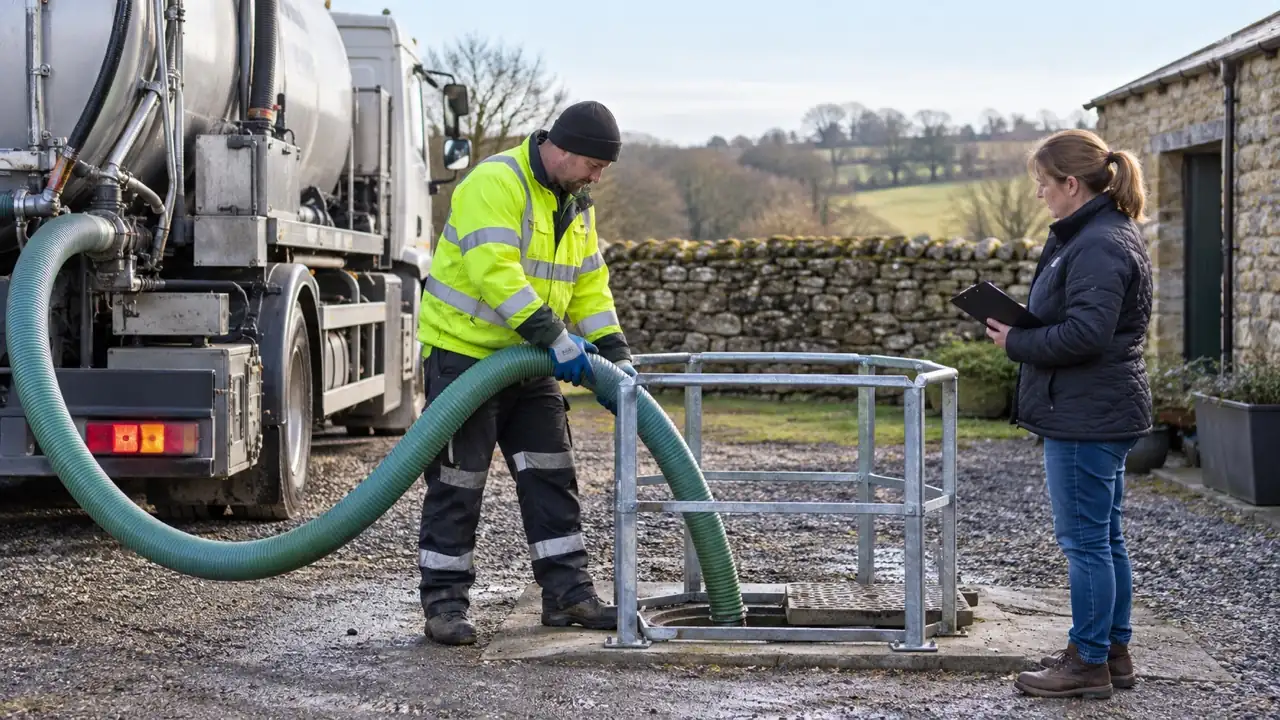
Understand the off-mains system before work begins
Septic tank
A septic tank separates solids from liquid before effluent passes to a suitable drainage field. Emptying removes accumulated sludge, but it does not restore a blocked outlet, repair a cracked tank or correct a drainage field that is no longer accepting flow.
Package treatment plant
A treatment plant includes mechanical or electrical treatment components and has its own service requirements. An alarm, unusual noise or loss of aeration needs a system-specific assessment rather than being treated only as a full-tank problem.
Cesspool or holding tank
A sealed storage tank has no discharge outlet and therefore requires emptying according to use and capacity. The owner should know which system is installed because the operating rules, maintenance tasks and likely causes of a backup differ.
Diagnosing slow drainage around a private system
A blocked inlet pipe, high sludge level, outlet restriction, saturated drainage field or treatment-plant fault can create similar symptoms inside the building. The tank level, recent emptying history, rainfall, alarms and condition of accessible connecting drains all help narrow the cause.
A CCTV camera can inspect a reachable pipe between the building and tank, but it cannot assess the whole drainage field simply by viewing the inlet. Wet ground, smells or rapid return of a high level should be recorded and assessed in the context of the complete system.
Build a useful maintenance record
Keep emptying dates, waste documents, service visits, alarm history, repairs, permits and information about the drainage field. Note changes in occupancy because water use affects loading. Covers should remain secure and accessible, while vehicles and heavy materials should be kept away unless the installation is designed for that load.
Current Environment Agency rules apply to small sewage discharges in England. The official links below should be checked when a property is sold, a discharge changes or a problem could affect the environment; an old property description is not a substitute for current compliance information.
Local off-mains drainage information
For properties in the town, surrounding villages and rural approaches, the Wetherby septic tank emptying page explains system identification, access, emptying records and the distinction between tank maintenance and a blocked connecting drain.