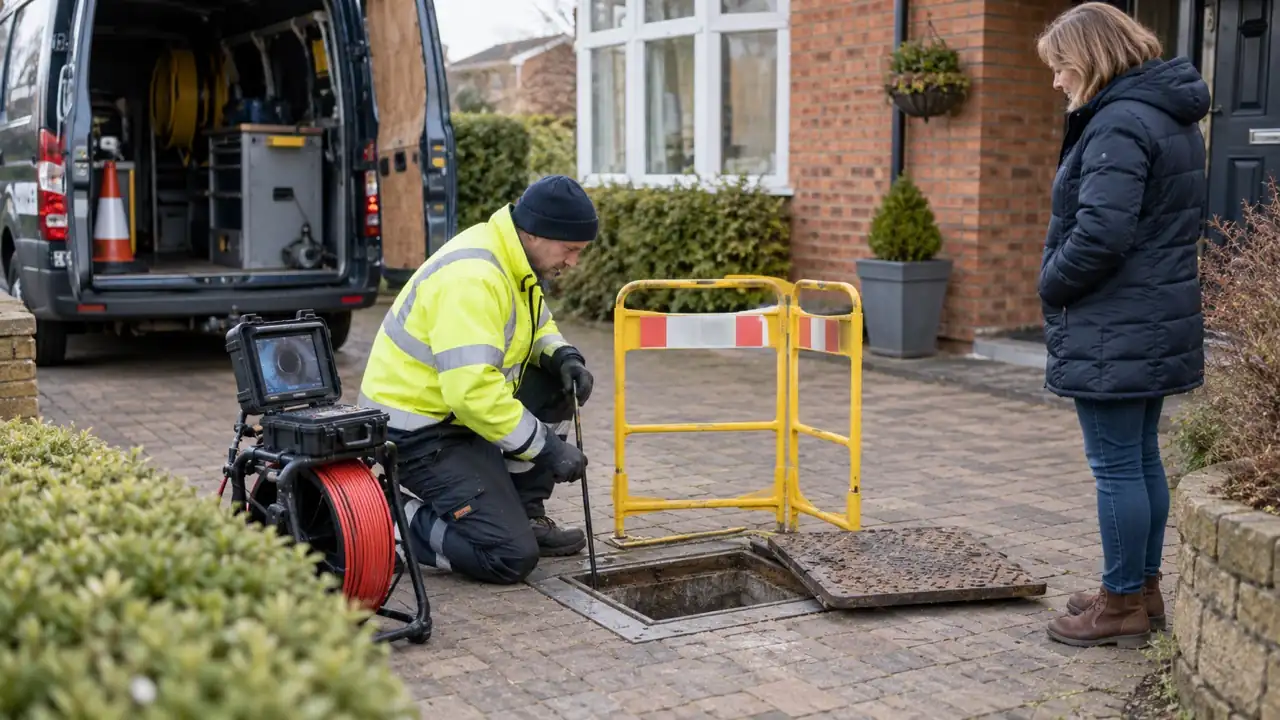
Check the scope
- Test fixtures carefully without causing an overflow
- Check accessible traps and grates
- Look for water in an external chamber
- Ask whether neighbouring properties are affected if a shared drain is possible
Simple measures
For a local waste fitting, remove accessible debris and use an appropriate plunger. Wear gloves, ventilate the area and keep contaminated water away from food-preparation surfaces.
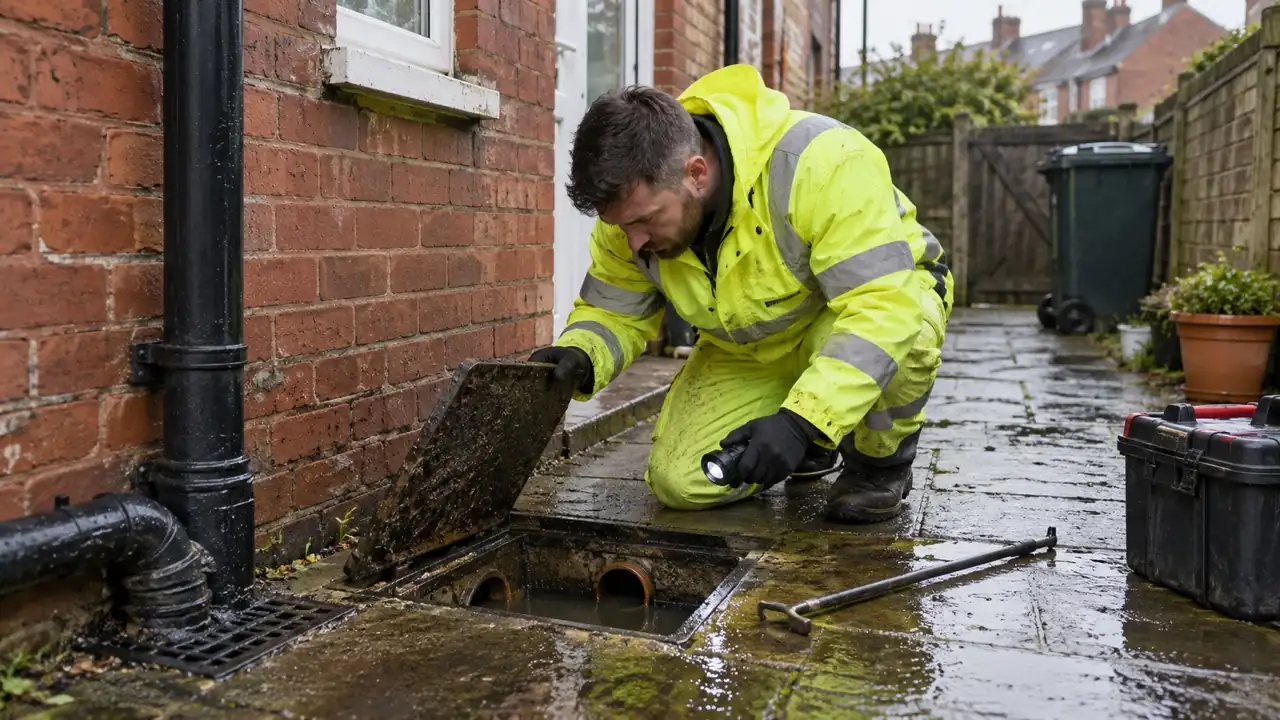
Stop and seek help
Stop if sewage is backing up, chemical cleaner has already been used, rods become stuck, the same drain repeatedly blocks or several fixtures are affected.
A step-by-step first assessment
1. Stop before it overflows
If water is rising, stop using the fixture and any appliance connected to the same waste route. Protect nearby surfaces and keep contaminated water away from food areas.
2. Check other fixtures
Test cautiously. If several fixtures are slow or one causes water to rise in another, the restriction may be beyond the local trap.
3. Remove accessible material
Hair, food or debris at a stopper, grate or removable trap can be cleared with gloves and a bucket. Refit the trap carefully and check for leaks.
4. Use a suitable plunger
Form a seal, control the overflow and work steadily. Test with a small amount of water; do not repeatedly fill a fixture that is not clearing.
When the blockage is probably underground
An overflowing outside chamber, multiple affected toilets or wastewater backing up at the lowest fixture suggests a restriction farther along the drainage system. Stop DIY work if you cannot identify a safe access point or if sewage is escaping.
After a minor blockage clears
- Run a controlled amount of water and check for leaks
- Clean and disinfect affected surfaces
- Dispose of debris through general waste
- Avoid repeating the disposal habit that caused the restriction
- Seek investigation if the same symptom returns
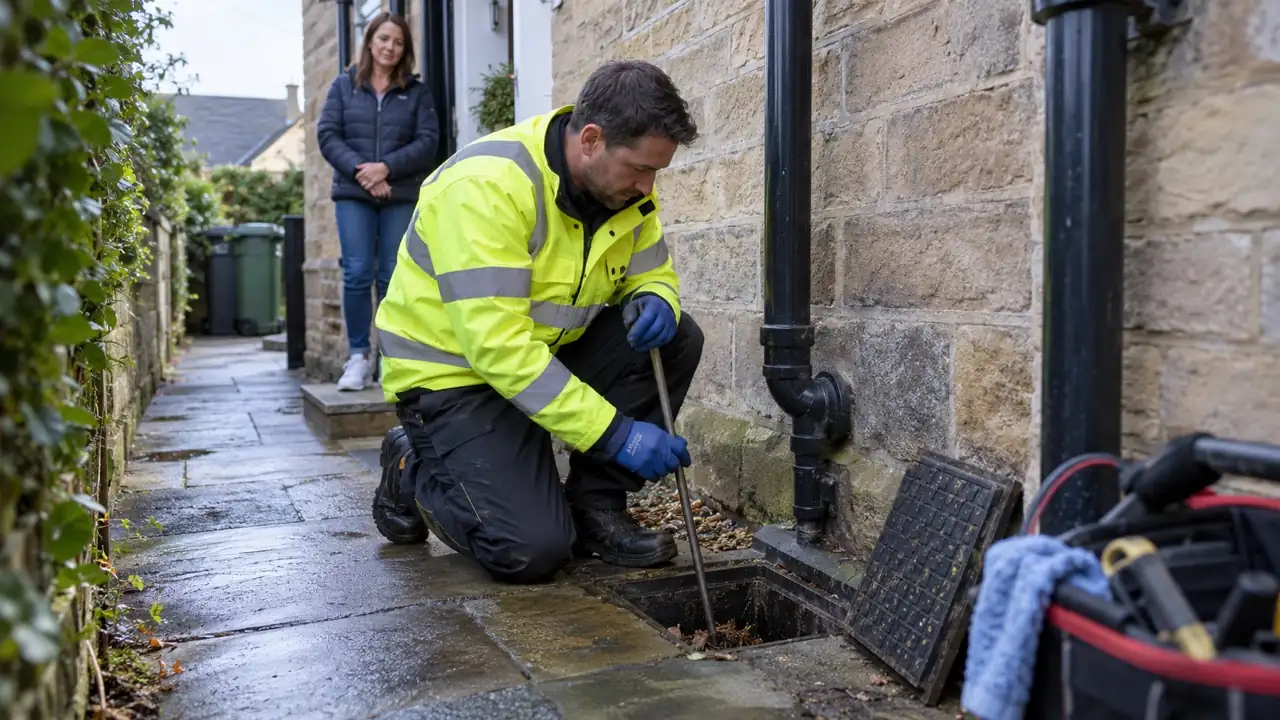
Work from the smallest likely problem outwards
Local fitting and trap
An isolated slow sink, bath or shower often justifies checking an accessible strainer, stopper or removable trap. Protect surfaces, use gloves and photograph washer positions before dismantling anything. Stop if the fitting is corroded, inaccessible or cannot be safely refitted.
Shared internal waste pipe
If two fixtures affect one another, the restriction may be after their branches join. Repeated plunging at one outlet may move water between fittings without clearing the common pipe. Limit testing so a shower tray, toilet or low-level drain does not overflow.
Underground drain
Several affected rooms, an external chamber holding water or sewage backing up usually points beyond a simple trap. Do not force improvised tools into an unknown route or enter a chamber. Professional clearance may require rods, water jetting or inspection from a suitable access point.
Why common DIY attempts can fail
Hot water may soften grease close to a sink while allowing it to cool farther along the pipe. Chemical cleaners may remain trapped behind an obstruction, damage some materials or expose the next person to a hazardous mixture. A rod or auger can also become stuck where the pipe changes direction or is already damaged.
A temporary improvement does not establish that the full restriction has gone. If slow flow, smells or cross-fixture gurgling return, record the pattern and stop repeating the same treatment. The next useful step may be pipe-wall cleaning or CCTV inspection after flow is restored.
Prevention after flow is restored
Use kitchen and shower strainers, keep fats and oils out of sinks, place wipes and sanitary products in general waste and remove leaves or gravel from private gullies at surface level. Appliance filters and waste hoses should be checked in accordance with the manufacturer’s instructions.
Prevention cannot repair a cracked, displaced or collapsed underground pipe. Recurrent trouble at the same position should be investigated with the earlier dates, clearance methods and any available footage in hand.
When to stop DIY work and arrange investigation
Wastewater is rising or escaping
Stop using connected fixtures, protect people from contamination and avoid electrical equipment in a wet area. Repeated flushing and appliance cycles can force more water into a restriction.
Several fixtures are affected
A cross-fixture problem is unlikely to be solved by repeatedly treating one plughole. The common waste or underground drain may need access from elsewhere and equipment suited to the pipe route.
A chemical product has already been used
Do not add another product or use a plunger that could splash the mixture. Retain the packaging and tell the operator what was used so exposure can be managed.
The blockage keeps returning
Recurrence after local cleaning can point to deposits farther along, roots, a displaced joint, poor fall or structural damage. A recorded clearance and follow-up CCTV survey may provide the evidence for a longer-term response.