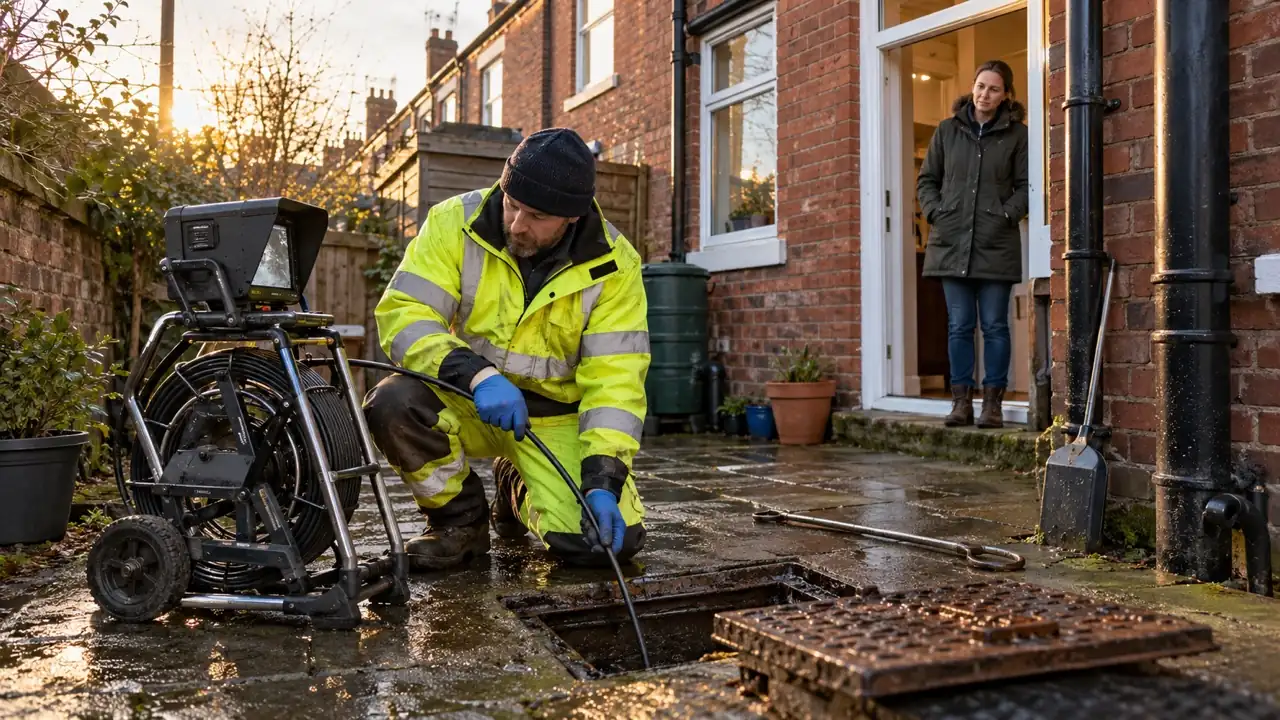
Common causes of a blockage
- Fat, oil and food deposits in kitchen drains
- Wet wipes, sanitary products and excess paper
- Scale, silt or debris in external drains
- Tree-root intrusion or displaced pipe joints
- Collapsed or damaged drainage pipes
How drains are cleared
The method should match the obstruction and pipe condition. Rodding may clear a local obstruction. High-pressure water jetting can remove accumulated deposits through a longer section of pipe. A CCTV inspection can help when the blockage returns or pipe damage is suspected.
Before you call
Avoid repeatedly flushing toilets or running taps if wastewater is backing up. Note which fixtures are affected and whether neighbouring properties have the same problem, as this can help distinguish a private drain issue from a shared sewer problem.
Where a blockage may be located
A single fixture
A slow sink, bath or shower may have hair, soap, food residue or scale within its trap or short waste pipe. If other fixtures drain normally, begin with safe checks close to that fitting.
Several fixtures
When several fixtures gurgle, drain slowly or affect one another, the restriction may be after their connections join. Continued use can increase the risk of wastewater backing up elsewhere.
An external chamber
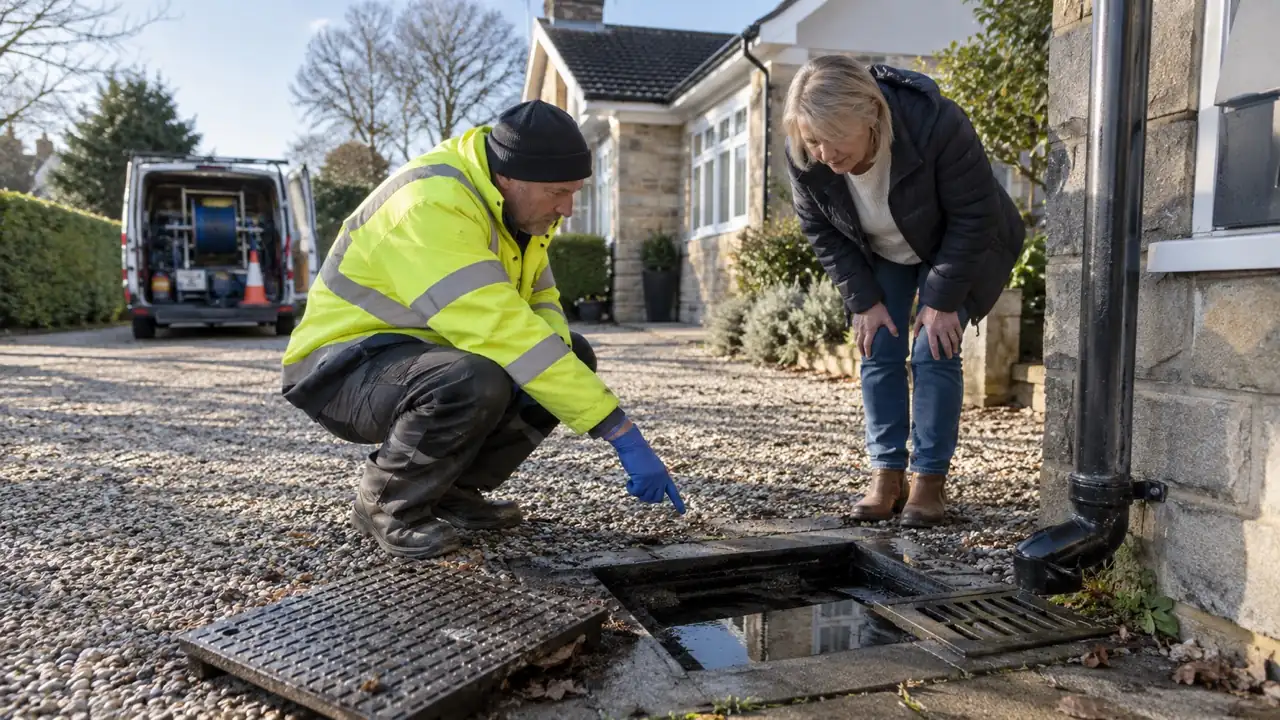
A chamber holding water indicates that flow is restricted downstream of that point, while an empty chamber can help narrow the problem upstream. Covers should only be checked where they are safe to access and lift.
Private and shared drainage responsibility
A pipe inside the property boundary is not automatically private in every case. Responsibility depends on the pipe's position, when it was built and whether it serves more than one property. Yorkshire Water's official guidance should be checked when a shared or public section may be involved.
Leeds City Council deals with highway gullies and certain flooding reports. A road-edge gully is separate from a private drain even when water appears close to a property boundary.
When clearance is not the whole answer
If the same drain blocks repeatedly, record how often it happens and what was removed. A cleaned pipe can then be surveyed for roots, displaced joints, deformation or poor flow conditions that may be causing the recurrence.
- Keep earlier invoices and footage
- Identify the same access point on each visit
- Ask whether the full pipe wall was cleaned
- Separate confirmed defects from assumptions
- Agree further work before it begins

A detailed approach to blocked drains in leeds
Establish the drainage route
The pattern of affected fixtures, accessible chambers and any existing plan helps establish how wastewater or rainwater should leave the property. This first step prevents a local trap, private drain, highway gully and shared sewer from being treated as the same system.
Choose equipment for the evidence
Rods, mechanical tools, water jetting and CCTV cameras have different purposes and limits. Access, pipe diameter, material, bends, deposits and suspected damage should be considered before equipment is used.
Record what was found
For recurring or structural problems, the useful record is not just that work was completed. It should identify the affected run, work performed, visible findings and any next step that requires separate approval.
Domestic, rented and commercial properties
In a home, list every affected fitting and whether an outside chamber is holding water. Landlords and managing agents should identify the units involved and retain previous records. Businesses should name the affected drainage zone, its use and the operational or hygiene consequences of taking it out of service.
Access can influence the method as much as the blockage itself. Parking, locked yards, basements, shared passages, heavy covers and restricted operating hours should be described before attendance so the likely equipment and safe working area can be considered.
Long-term drainage care
Good maintenance combines sensible disposal, accessible chambers, surface-level gully cleaning and a record of repeat symptoms. High-use kitchens, washrooms and process areas may benefit from a written maintenance plan based on actual deposits and operating conditions rather than an arbitrary schedule.
When the same section repeatedly blocks, cleaning and inspection can provide more value than repeated one-off clearance. Any repair recommendation should be tied to a visible, located defect and the condition of the surrounding pipe.
Common situations and the next useful step
Flow returns after a one-off obstruction
Confirm the affected fixtures discharge normally and ask what material was removed. If the drain remains free-flowing and there is no history of recurrence or damage, sensible disposal and access maintenance may be all that is required.
The same section blocks again
Repeated work should build on the earlier record. The access point, distance, material and cleaning method can be compared before a camera is used to check the visible pipe wall for roots, open joints, deformation or other recurring features.
Several properties report symptoms
Check whether a shared or public sewer may be involved. Neighbouring overflows are not proof of private responsibility, and paying to work from one property may not address a restriction maintained by the sewerage undertaker.
Building work is planned nearby
Existing access points and drainage routes should be recorded before they are covered or altered. Where a public sewer may be close, available records and Yorkshire Water’s build-over requirements need consideration alongside any private survey.
Questions to settle before authorising further work
What has been confirmed?
Separate observations from assumptions: which pipe was accessed, what was removed, what the camera reached and which defect was visibly located. A diagnosis is stronger when another person can relate it to a chamber, distance and surface feature.
What remains outside the scope?
Uninspected branches, standing water, inaccessible chambers, ownership, ground conditions and other buried services may require different evidence. These limitations should appear in the record rather than being presented as though the whole system was assessed.
How will the result be checked?
Agree whether completion means restored flow, cleaned pipe walls, survey files, a finished repair or reinstated surfaces. For structural work, post-repair footage and written location details make the result useful for future owners and contractors.