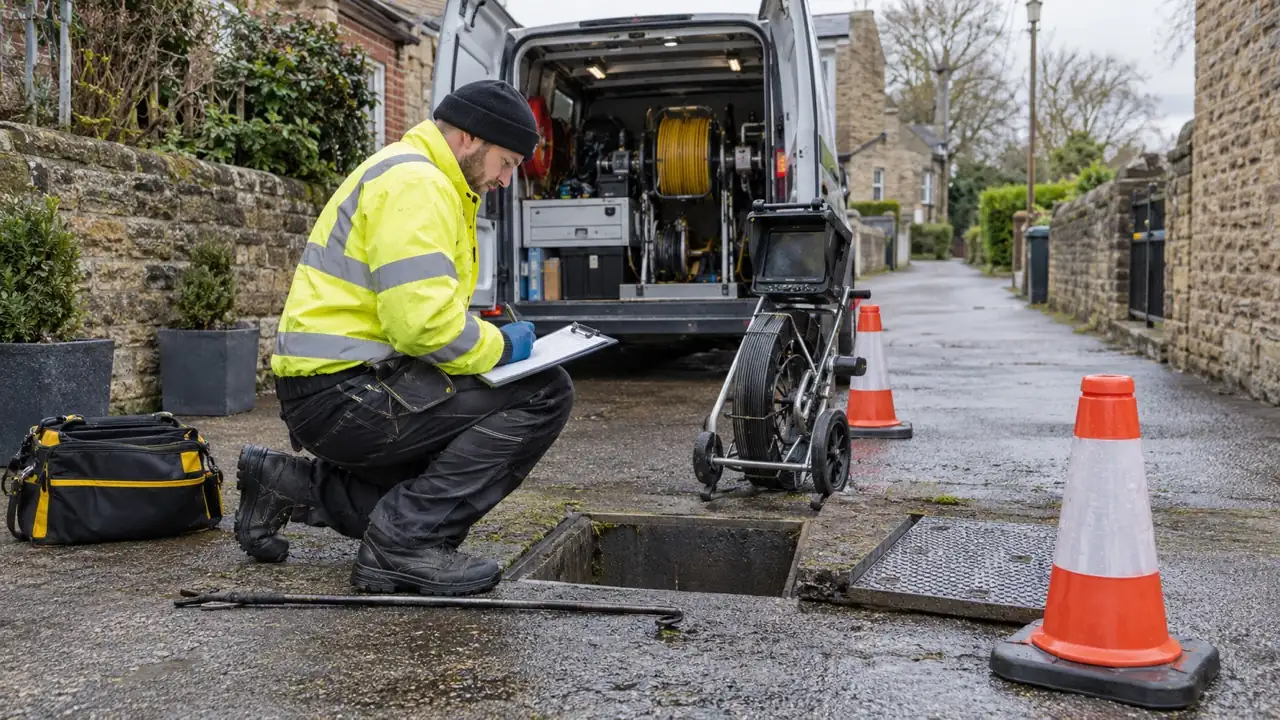
What can affect the price
- The type and location of the blockage
- Access to chambers and pipework
- The equipment and time required
- Whether inspection or repair work is needed
- Travel, parking and the time of attendance
Questions worth asking
- Is there a separate attendance charge?
- What clearance work is included?
- Will additional work be agreed before it begins?
- Is VAT included in the stated figure?
- Will I receive a record of any inspection findings?
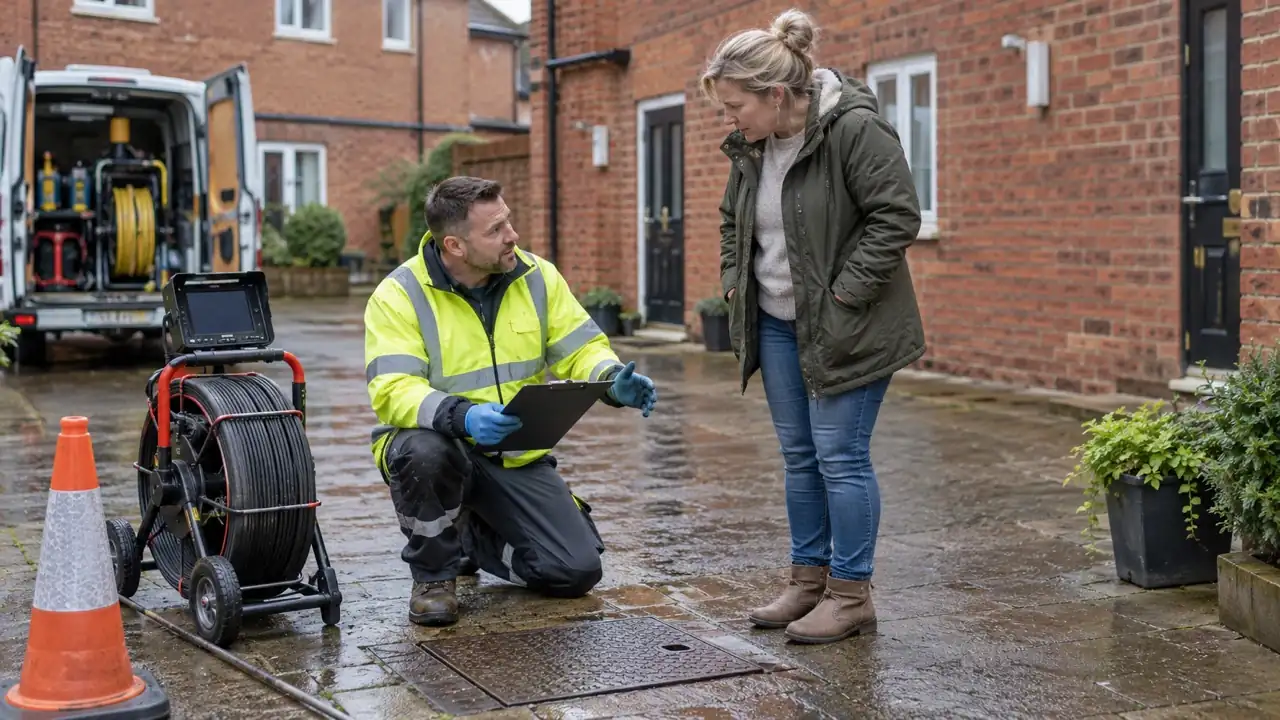
Why prices vary between properties
A straightforward obstruction with clear access is different from a blockage beneath a building, a damaged pipe or a drain that first needs cleaning before it can be surveyed. Ask what the quoted attendance includes and how any additional work would be agreed.
Common ways drainage work is priced
Attendance or diagnostic fee
This may cover travel and an initial assessment but not necessarily clearance. Ask whether it is payable if no work proceeds.
Fixed scope
A stated amount may cover defined equipment, time or access. Confirm what happens if the blockage cannot be reached within that scope.
Hourly or time-based work
Ask when charging starts, which personnel and equipment are included, and how additional time will be approved.
Quoted repair work
Repairs should normally be based on inspection evidence and a written scope that includes access, materials and reinstatement.
A useful written quotation
Headline prices are difficult to compare when one includes only attendance and another includes clearance or inspection. Compare the defined scope rather than the largest or smallest number on the page.
- Business name and contact details
- Property and drainage area covered
- Attendance, labour and equipment included
- VAT position
- Waste removal or disposal where relevant
- Survey footage or report deliverables
- How variations will be agreed
- Payment timing and any stated guarantee terms
Avoiding unexpected additions
Do not authorise excavation, relining or major additional work from a verbal assertion alone. Ask to see the evidence, understand the alternatives and receive the revised price before the scope changes.
Examples of different drainage scopes
Reachable one-off obstruction
Clear access and a straightforward removable obstruction may fit a defined clearance scope. Ask whether cleaning and a flow check are included, rather than assuming the lowest advertised figure covers everything.
Recurring blockage
The scope may include clearance, cleaning and a separate CCTV inspection. Confirm which work is included immediately and which would require additional approval.
Suspected structural damage
Inspection should come before a repair quotation. Excavation, relining and reinstatement involve different materials, access and documentation and should not be treated as an ordinary unblocking charge.
Out-of-hours or restricted access
Timing, parking, keys, permits, site inductions and multiple personnel can affect the work. Provide these details at the beginning so the quotation is based on the real conditions.
Checking an invoice after the work
The invoice should identify the property, date, work performed and agreed additions. Retain it with any footage, images or repair plan so a future contractor can see whether the drain was opened, cleaned, surveyed or structurally repaired.
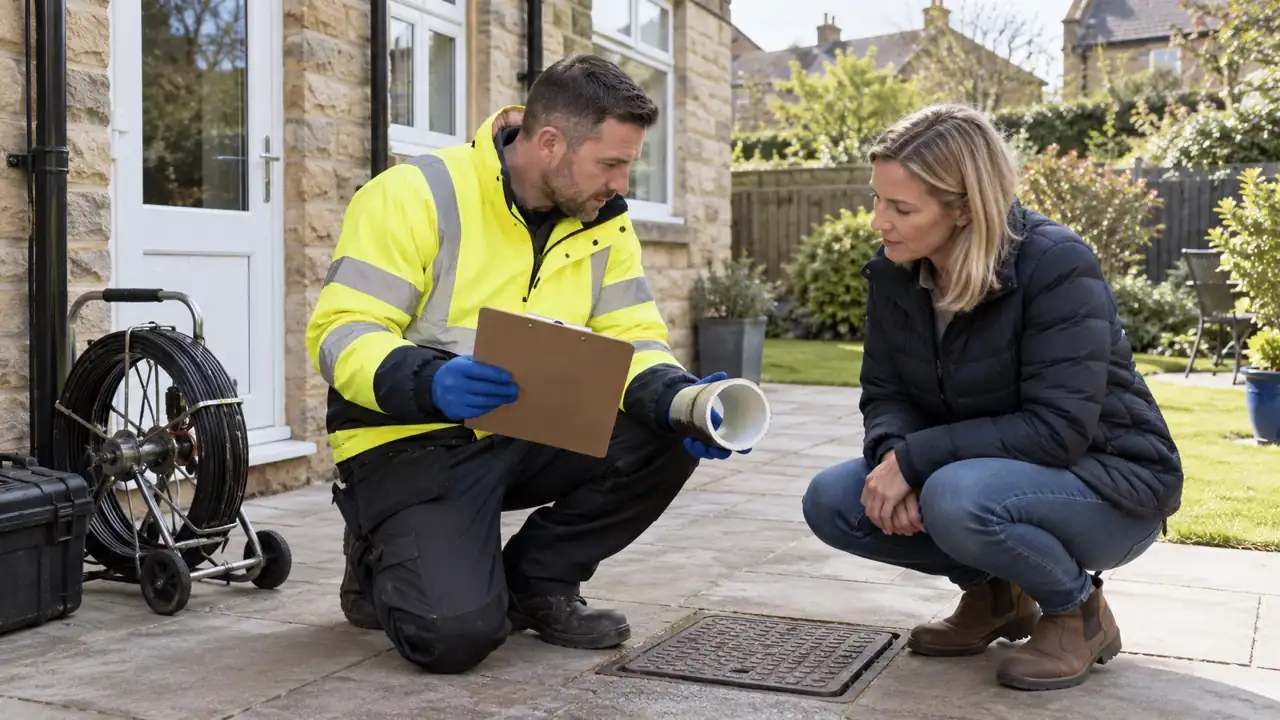
Compare a defined scope, not a headline claim
For drain clearance
Check which access point, equipment, working period and flow test are included. Opening a narrow route through an obstruction is not necessarily the same as cleaning a longer deposited pipe or investigating why the problem returns.
For CCTV inspection
Agree the runs to be surveyed, whether pre-cleaning is included and what records will be supplied. Live commentary, video files, stills, a sketch and a formal condition report are different deliverables.
For structural repair
The quotation should reference the confirmed defect, repair length, material, access, connections, testing and reinstatement. Ask how variations will be approved if the conditions differ from the initial footage.
Records that support accountability
Keep the supplier’s trading identity, accepted quotation, changes, attendance record, footage, photographs and invoice together. If a scheme membership, insurance, guarantee or waste registration affects the decision, verify that item with the relevant organisation and retain the current evidence.
For commercial sites, note working hours, inductions, permits, traffic routes and hygiene controls. A clear drainage-zone plan and labelled chambers can reduce investigation time and make planned maintenance comparable from one visit to the next.
Questions to ask before accepting the work
What result is included?
Confirm whether the task ends with flow restored, pipe walls cleaned, footage supplied, a written report completed or surfaces reinstated. Those outcomes involve different time, equipment and evidence.
How are extra findings handled?
A quote should explain which changes need approval and who can authorise them. A newly visible defect after cleaning may justify a separate proposal, but it should not automatically expand the original scope.
What happens if access is unavailable?
Locked areas, buried covers, traffic restrictions and missing plans can change the work. Establish whether another access point, tracing or preparatory work would be quoted separately.