Drainage access around Headingley
Across inner Leeds, drainage may serve terraces, converted properties, purpose-built flats and small commercial premises. Establishing whether neighbouring properties are affected can help distinguish a private blockage from a shared-sewer problem.
Inner north Leeds contains terraces, converted houses, purpose-built flats, student accommodation and local commercial streets. One drainage run can therefore serve several fixtures, floors or occupancies before it reaches an accessible chamber.
When calling about a property in Headingley, provide the full postcode, describe every affected fixture and mention any accessible inspection chambers. This avoids treating a local waste-pipe problem, a private underground drain and a shared sewer as though they were the same fault.
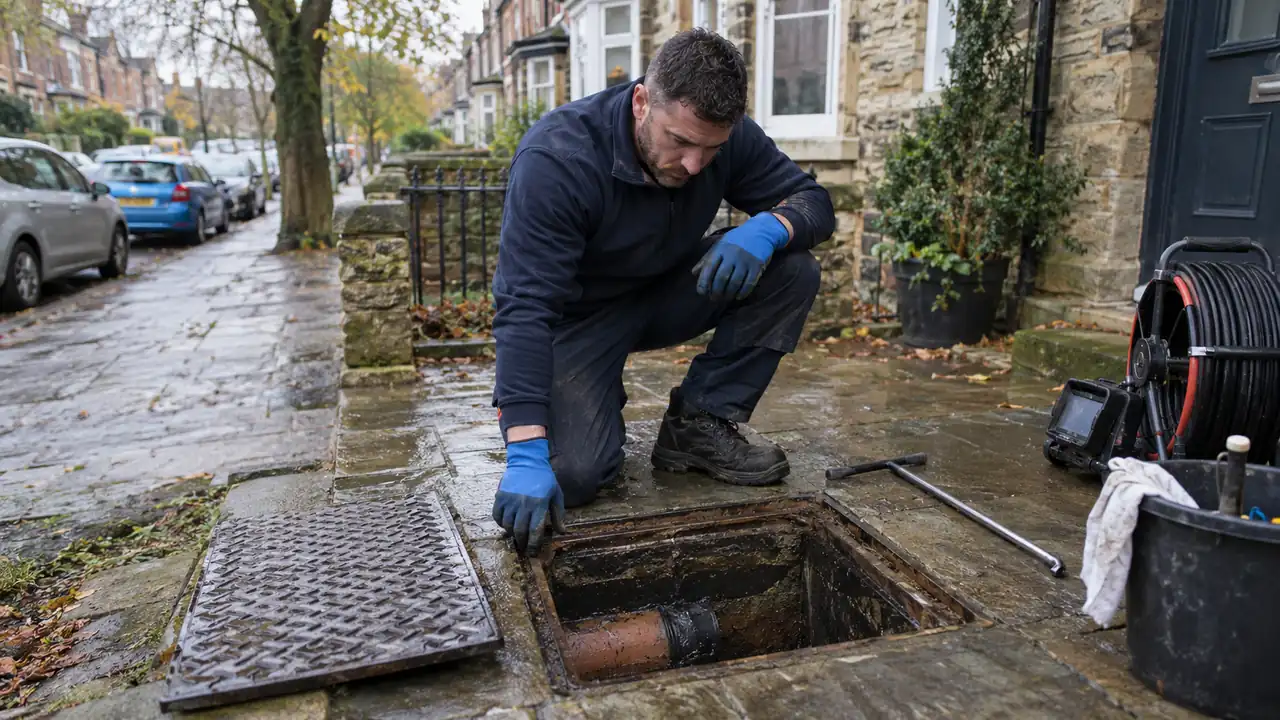
Common causes of blocked drains in Headingley
A blockage can form close to a single fitting or farther along an underground drain. The material entering the system, the pipe condition and the drainage layout all affect what is required.
Fat, oil and food residue
Cooking fats can cool and adhere to the inside of kitchen waste pipes. Food particles then collect on the deposit, gradually narrowing the route. A restriction of this kind may first appear as a slow sink before it affects a longer section of drain.
Hair, soap and scale
Bathroom traps and short waste pipes can collect hair, soap residue and mineral deposits. This is often a local plumbing problem, but several slow bathroom fixtures may indicate a restriction after their connections join.
Wipes and unsuitable items
Wet wipes, sanitary products, nappies and other items that do not disperse like toilet paper can catch at a joint or existing deposit. Repeated flushing may move the symptom temporarily without removing the obstruction.
Silt, roots and damaged pipework
External drains can accumulate soil, leaves, gravel and building debris. Roots may enter through an open or displaced joint, while a cracked, deformed or collapsed pipe can repeatedly catch otherwise normal waste.
What blocked-drain symptoms can reveal
One slow sink or shower often points to a restriction close to that fitting. Several fixtures gurgling or backing up together suggests the obstruction may be further along the drainage run. An external chamber that remains full after water use stops is another useful clue.
- Which fixture showed the first symptom
- Whether wastewater rises elsewhere when a tap or toilet is used
- Whether neighbouring properties report the same problem
- Whether the restriction has previously been cleared
- Whether the affected chamber is inside the boundary or on the highway
Ask whether the symptom is confined to one room, one flat or the whole building. That distinction, together with the position of external chambers, helps narrow the inspection route and avoids unnecessary work in unaffected pipework.
How a blockage is located
The pattern of affected fixtures is compared with the known drainage route. Where safe access is available, chamber levels can show whether flow is reaching a point and where it stops. That evidence helps select a sensible entry point instead of working blindly from the nearest fitting.
A camera is not always the first step. If the pipe is full or visibility is obstructed, the drain may need to be opened and cleaned before useful footage can be obtained. Where a defect is suspected, the position should be recorded against an access point or surface feature.
Drain-clearance methods used around Headingley
Rodding and mechanical tools
Drain rods can break through or retrieve some reachable obstructions from a suitable chamber. Mechanical tools may be considered for particular deposits or roots, but the operator needs to understand the pipe route and condition to avoid losing equipment or worsening damage.
High-pressure water jetting
High-pressure drain jetting can move grease, silt and loose deposits through suitable pipework while cleaning more of the pipe wall than a narrow opening alone. Pressure, nozzle and direction should be appropriate for the material, diameter and suspected condition of the drain.
CCTV inspection
If the same drain in Headingley has blocked more than once, simply opening the restriction may leave the underlying cause unexplained. A CCTV drain survey in Headingley can help identify visible defects, roots, displaced joints or deposits after the pipe has been made accessible.
Repair after a confirmed defect
A localised patch, a longer structural liner or excavation may be considered when inspection confirms damage. The appropriate choice depends on the pipe’s shape, material, access and the extent of the defect; a blockage by itself is not proof that a repair is required.
Homes, rented property and business premises
At a house, establish whether one fitting, the whole building or an outside chamber is affected. In a rented or multi-occupancy property, record which units share the problem and notify the person responsible for arranging building repairs.
Commercial premises should explain how the affected drain is used. A kitchen line, staff washroom, production area and surface-water gully present different likely deposits and different consequences if the service is interrupted.
- Keep tenants, staff and customers away from wastewater
- Record repeat incidents and previous clearance methods
- Keep access routes and private chamber covers available
- Explain any site rules, loading restrictions or locked areas
Reducing repeat blockages
In shared housing, clearly labelled waste rules can reduce wipes, cooking oil and food residue entering the system. Landlords should retain previous clearance, survey and repair records because repeat incidents are easier to assess with a history.
Only toilet paper and human waste should be flushed. Fats and oils should cool in a container and go through an appropriate waste route, while strainers can keep hair and food particles out of smaller waste pipes. Private gullies should be cleared at surface level without pushing debris farther into the drain.
If a blockage returns at the same point, ask whether the pipe has been fully cleaned and whether inspection has identified a joint, root entry, deformation or poor fall. Repeated emergency clearance can cost more over time without resolving a structural or maintenance cause.
Before a drain-unblocking visit in Headingley
Stop using affected fixtures if wastewater is backing up and keep people and pets away from contaminated water. Do not lift a heavy or unsafe chamber cover. Make keys, parking instructions and any previous survey or repair record available where relevant.
For an active sewage escape, see the urgent drainage guidance. If several properties are affected, check the official responsibility information below before paying for work on a pipe that may belong to the sewerage undertaker.

Blocked-drain scenarios in Headingley
External chamber surcharge
Where an inspection chamber at a Headingley property remains full, the obstruction is normally downstream of that point. A sequence of accessible chambers can help narrow the restricted section, but covers should only be checked where they are safe, private and designed to be opened without risk.
Wastewater rising at the lowest fixture
When a washing machine, sink or upstairs toilet discharges and water rises in a shower, floor drain or downstairs toilet, the blockage may sit after those connections join. Stop test-flushing once the pattern is clear. Adding more water can turn a useful diagnostic sign into avoidable contamination.
Surface water after rainfall
A private rainwater gully can block with leaves, silt or gravel, while a road-edge gully is normally reported to the council. Flood information for Headingley provides wider area context but does not prove that one private drain is defective. Note whether the water appears only during rain and whether foul-water fixtures are also affected.
Several properties affected together
Simultaneous symptoms at neighbouring properties can indicate a shared or public section. Check where each property’s last accessible chamber sits and use Yorkshire Water’s ownership and sewer-flooding guidance before authorising private work on infrastructure that may fall outside the property owner’s responsibility.
Tools used to clear and investigate drains
Rods, plungers and mechanical cables
Manual tools can open some reachable soft or local obstructions. They depend on a suitable access point and an understood route. Forcing a tool through an unknown bend, displaced joint or collapsed section can lodge the head or damage already fragile pipework, so resistance should be interpreted rather than overcome blindly.
Jetting hoses and specialist nozzles
High-pressure water jetting uses the reaction from a selected nozzle to draw a hose through suitable pipework, break deposits and move loosened material towards an appropriate collection or downstream route. Penetrating, flushing, grease-cleaning and root-cutting nozzles perform different tasks. Pressure, water flow and direction need to suit the pipe and obstruction.
Camera, distance counter and sonde
After flow and visibility are restored, a camera can record the pipe wall. A cable counter gives a distance from the access point, while a compatible transmitting sonde can help a locator estimate the surface position and depth of a reachable feature. These measurements are evidence for planning; they are not a substitute for checking other buried services before excavation.
Wet recovery and debris handling
Silt, grease, roots and foreign objects do not simply disappear because flow returns. The chosen method should consider where loosened material will go, whether it can be safely removed and whether pushing it farther along could create another restriction. Commercial waste and contaminated material may also require appropriate handling.
From immediate clearance to a longer-term plan
Confirm that flow is genuinely restored
A flow check should use the affected fixtures and, where safe, observe the relevant access point. A narrow opening through grease or scale may pass a small test while leaving most of the deposit in place. Ask whether the work opened the blockage, cleaned the pipe wall or included an inspection, because these are different outcomes.
Investigate a repeated restriction
If the drain blocks again, compare the date, access point, material removed and previous method. A cleaned and surveyed pipe can show whether the recurrence is associated with user deposits, roots, an open joint, deformation, an intruding connection, poor fall or a section that holds water.
Choose repair only when the evidence supports it
A local patch, structural liner or excavation should correspond to a located defect and the condition of the surrounding pipe. A1 Drainage’s drain-repair guide explains the main options. For public or shared pipework, ownership and permission should be established before a private repair is planned.
Preventative drainage maintenance in Headingley
Households and rented homes
Keep fats, coffee grounds, food particles, wipes, sanitary products and excess paper out of drains. Clean accessible strainers and traps, keep chamber covers visible and give tenants clear disposal guidance. A maintenance record is especially useful when occupancy changes or the same stack serves several units.
Commercial kitchens and high-use washrooms
A site plan should identify the drainage zones serving kitchens, toilets, production areas and yards. Grease-management arrangements, cleaning frequency and repeat blockage positions can then be reviewed against actual use. Planned cleaning should have a defined scope and recorded result rather than being an unexplained recurring charge.
Outdoor drains and building work
Leaves and loose silt can be removed from private gullies at surface level. Mortar, grout, plaster, concrete washout, soil and landscaping gravel should never be allowed into drainage. Before an extension or resurfacing project, record chamber positions so access is not buried or built over without the necessary checks.
Questions about drain unblocking in Headingley
Should I use the affected toilet or sink?
Stop if wastewater is rising, a chamber is overflowing or another low fixture reacts when water is used. If one sink is merely slow and every other fixture is normal, a careful local check may be reasonable, but avoid repeated testing that adds water to a restricted drain.
Does a bad smell always mean a blockage?
No. A dry or defective trap, poorly sealed fitting, venting issue, deposit, dead leg or drainage defect can produce odours. Note when and where the smell occurs, whether flow is slow and whether it changes after water is run. Persistent unexplained smells may justify a broader investigation.
Will jetting damage an old drain?
Water jetting is not one fixed treatment. A competent operator considers pipe material, condition, access, nozzle, pressure and flow. Where collapse or severe weakness is suspected, inspection or a different method may be needed before aggressive cleaning is attempted.
When is a CCTV survey worth adding?
A camera is most useful after the drain is clear enough to see and when the answer will change the next decision. Repeated blockage, suspected roots or damage, a proposed repair and a need to document the finished condition are stronger reasons than surveying every straightforward one-off obstruction.
