Not every cleared blockage needs a camera survey
If a one-off obstruction is retrieved, the pipe clears fully and there is no history or sign of damage, further inspection may add little. Routine footage should not be presented as essential without explaining the question it is intended to answer.
A survey becomes more proportionate when the problem has returned, the clearance work suggests roots or structural damage, or a buyer, landlord, insurer or building project needs a recorded condition of identified drains.
Situations where CCTV can provide useful evidence
The same drain blocks repeatedly
Post-cleaning footage may show an open joint, root entry, deformation, rough deposit or standing-water position associated with the recurrence. The article on recurring blocked drains in Wetherby explains how to compare that finding with the earlier symptom and clearance record.
Hard material or roots are removed
The camera can look for the opening through which roots entered or for damage associated with recovered pipe fragments. It should also show enough surrounding pipe to decide whether the finding is localised or part of a longer problem.
Repair work is being considered
Patching, lining and excavation need different information about the pipe. Before work is approved, use the Wetherby drain-repair evidence checklist to compare the defect position, pipe dimensions, access and proposed repair length.
Property work could affect drainage
A pre-work survey can document accessible runs before an extension, resurfacing or other construction. It does not replace sewer records, legal searches, building control or permission required for work near public apparatus.
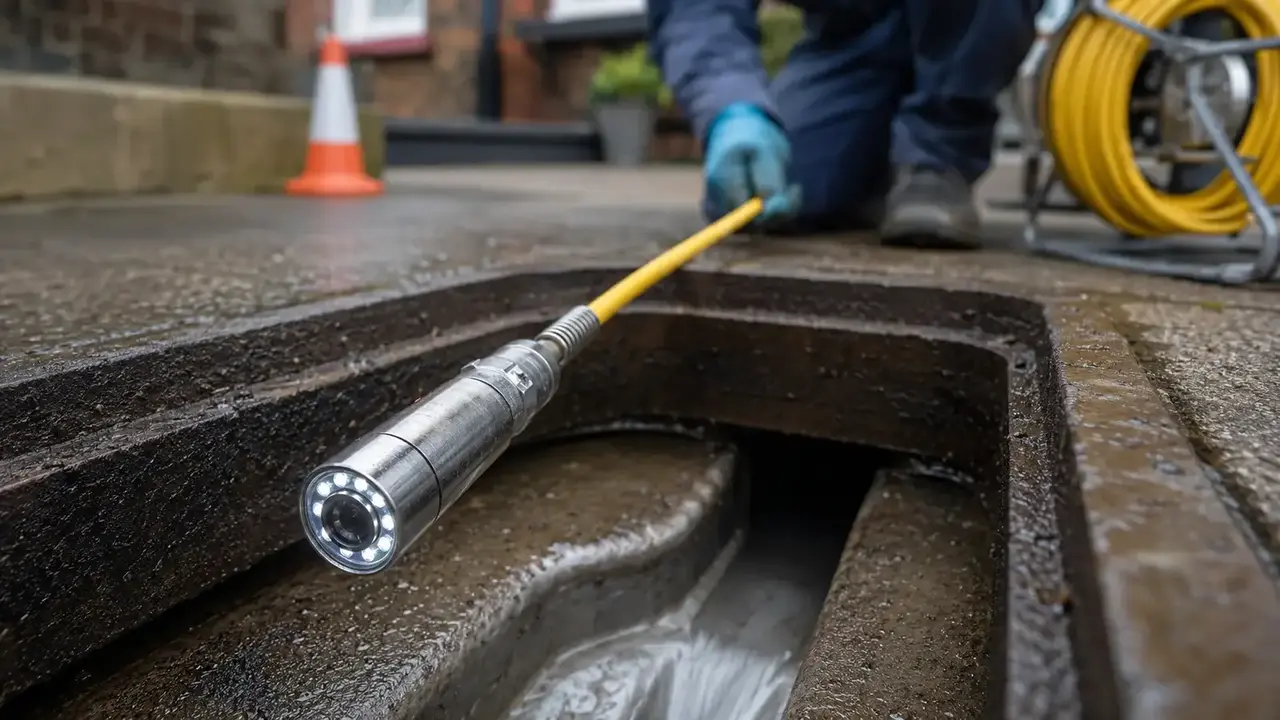
Prepare the drain before relying on footage
A camera cannot see the pipe wall through sewage, dense grease, scale, roots or compacted silt. The first pass may only locate an obstruction; clearance and suitable cleaning can be needed before the condition survey begins.
Preparation should match the pipe condition. Aggressive cutting or jetting through an unknown fragile drain can cause avoidable damage, so the operator may need to progress in stages and record any section that remains unsafe or inaccessible.
How the accessible pipe is inspected
Camera and access point
A push-rod camera commonly enters through an inspection chamber, rodding eye or other suitable opening. Camera-head size, cable stiffness, pipe diameter, bends and junctions determine how far it can travel.
Distance and surface locating
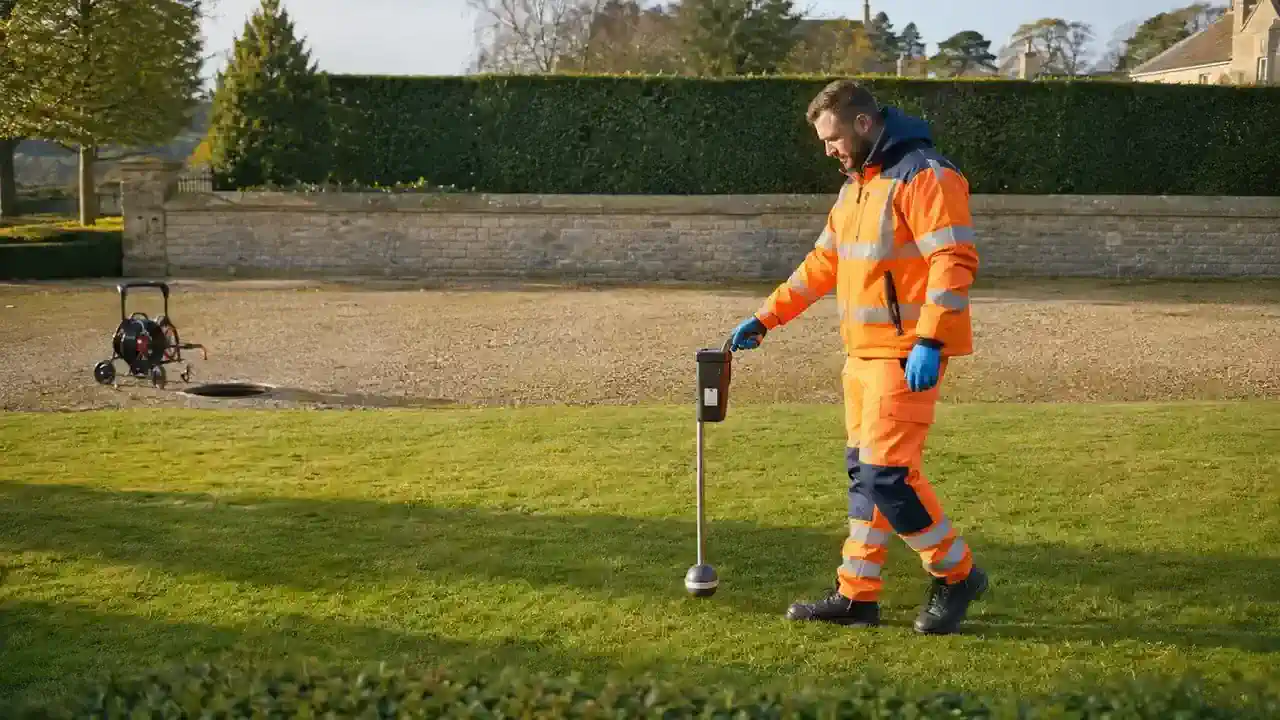
A cable counter can reference distance from the access point, while a compatible sonde and receiver can estimate a surface position and depth. These readings have tolerances and do not replace buried-service checks before excavation.
Direction and route identity
The record should state the chamber used, direction of travel and relationship to affected fixtures or buildings. Without those details, later viewers may be unable to tell which of several similar drains appears on screen.
What a camera can and cannot establish
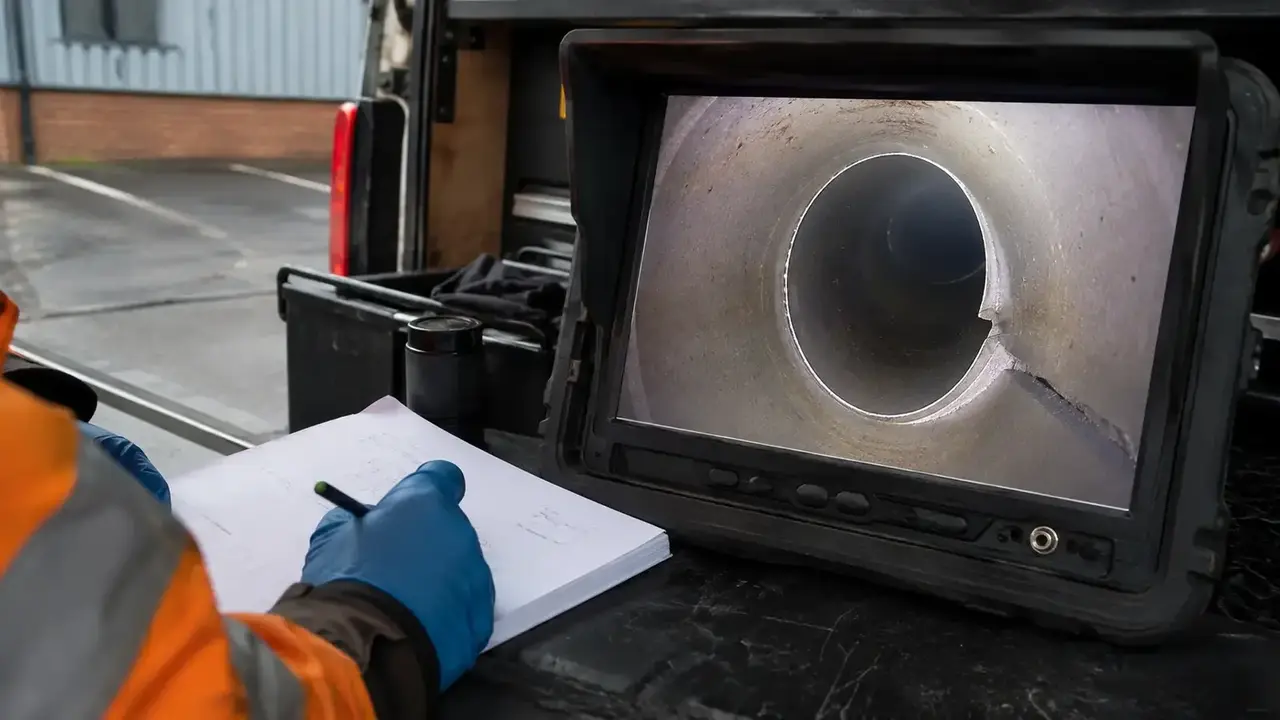
A visible observation should be separated from its interpretation. For example, an open joint may be recorded clearly, but the report should explain whether it affects flow, allows root entry or needs monitoring rather than assuming every imperfection requires repair.
- It can show accessible deposits, roots, open joints, cracks, fractures and deformation
- It can document areas of standing water and visible intruding connections
- It cannot inspect a branch that the camera cannot enter
- Standing water can hide the lower section of a pipe
- It cannot confirm every ground condition outside the pipe
- It does not decide legal ownership or responsibility by itself
What to request in the survey report
The level of reporting should suit the decision. A homeowner checking one recurring obstruction may need a concise located record, while a purchase, insurance matter or construction project may require a wider mapped and formally coded survey.
- The agreed runs and purpose of the survey
- Access points, direction and measured distances
- Video or still images tied to written observations
- Sections not inspected and the reason for each limitation
- Located repair recommendations proportionate to the findings
- A durable file format and clear property and date references
Use the survey to choose a proportionate next step
The result may support no structural work, improved disposal, further cleaning, monitoring, a local patch, relining or excavation. Where a longer compatible defect is identified, review drain relining after a blockage before treating reduced excavation as proof of suitability.
For the dedicated local service, the drain survey Wetherby page explains equipment, scope, reporting and limitations in more detail. Keep the survey with any later clearance or repair record so the drainage history remains usable.
Local service information for Wetherby
For an active restriction, review the Wetherby drain-unblocking service. Explain which fixtures or chambers are affected, whether the problem has happened before and whether neighbouring properties report similar symptoms.