A blockage alone does not justify relining
A drain may block because of disposable material or deposits even when the pipe remains serviceable. Review why Wetherby drains keep blocking before treating a recurrence as evidence that the pipe must be lined.
The sequence matters: restore access, clean the drain, survey the full proposed section and then compare repair choices. The CCTV survey after drain unblocking guide explains why footage obscured by sewage, roots or scale cannot reliably define the liner route.
Defects that may be compatible with a liner
The complete route still needs assessment. One suitable crack does not prove that a liner can pass every bend, diameter change, displaced joint or connection in the proposed length.
- Cracks and fractures where the host pipe retains a usable shape
- Open or leaking joints that can be prepared adequately
- Root-entry points after roots and unsuitable material are removed
- A longer section containing several compatible local defects
- Pipework beneath a floor, drive or established surface where excavation would be disruptive
Conditions that can prevent or complicate relining
Collapse, missing pipe or severe deformation
A liner needs a continuous route through the host drain and broadly adopts its existing shape. A collapsed gap, major flattening or missing section may require excavation or a combined repair before any remaining length can be lined.
Poor fall and standing water
Relining can improve internal continuity but does not normally lift a low section or create a new gradient. If pipe movement causes water to pond, the finished liner may continue to follow that level.
Unmapped branches and difficult access
Connections entering the lined section need to be identified and protected or reopened. Tight bends, diameter changes and insufficient working access can also change the installation method or rule out a proposed route.
Continuing external movement
Ground movement, loss of bedding, heavy loading or nearby work may need separate investigation. A liner repairs the inside of a suitable host pipe but does not automatically remove the external cause of damage.
What happens during cured-in-place pipe lining
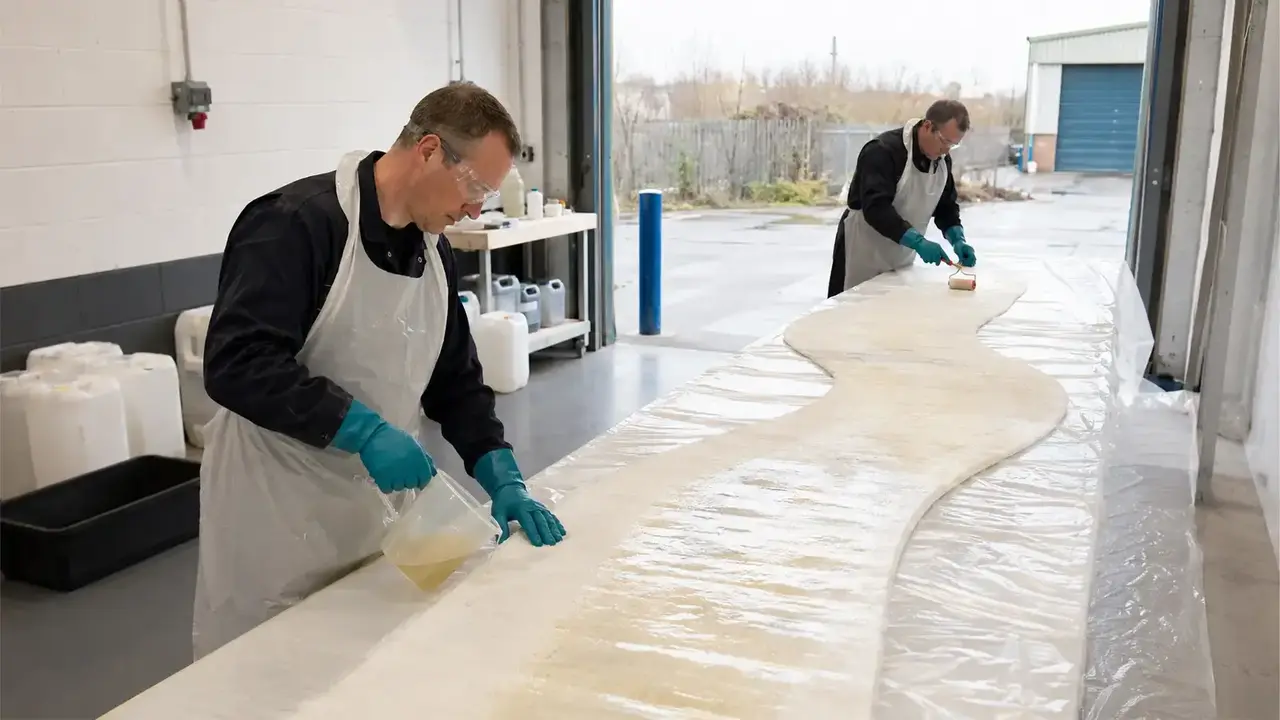
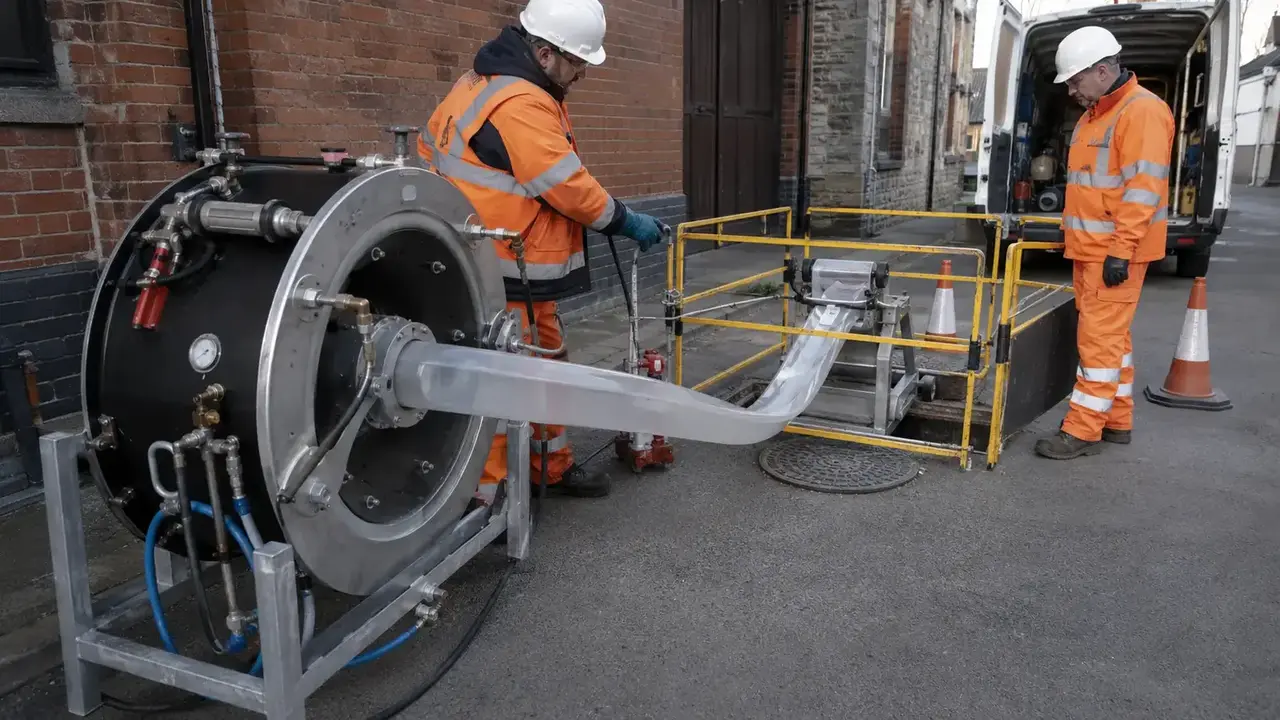
A resin-impregnated liner is prepared to suit the measured pipe and repair length. It is positioned by inversion or pull-in methods, held against the host pipe and cured using the specified process so that it forms a rigid internal pipe.
Curing may use ambient reaction, heated water, steam or ultraviolet equipment depending on the system. Resin quantity, working time, pressure, temperature and curing records are controlled parts of the installation rather than interchangeable details.
Branches, ends and post-installation checks
Any lateral connection covered by the liner must be reopened where required using suitable internal cutting equipment. The liner ends are trimmed and finished at the agreed positions so that the transition does not create an avoidable obstruction.
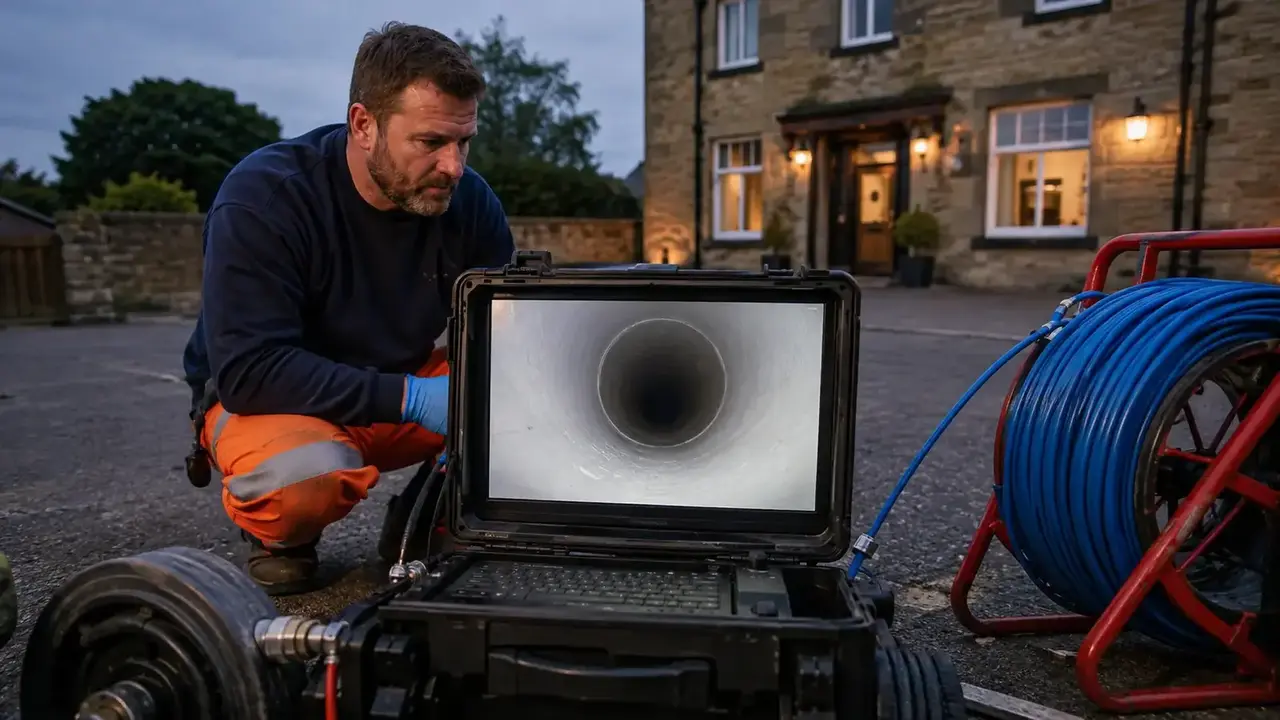
A final CCTV pass should record the visible finish, continuity, ends and reopened connections. It should be compared with the pre-lining survey and identify the exact treated length as well as any pipework left outside the repair.
Compare relining with patching and excavation
A local patch may be more proportionate for one short compatible defect, while a longer liner may address several defects along a stable run. The guide to when a blocked drain needs repair compares these options against the defect, pipe shape and surrounding conditions.
Reduced surface disruption is a potential advantage of lining, but it should not override technical suitability. Compare the complete scope, including cleaning, access, connection reopening, curing controls, reinstatement and completion evidence.
Questions to ask before approving relining
- Which defects have been confirmed and at what measured positions?
- Why is the proposed pipe and repair length suitable for this liner?
- What cleaning, cutting and preparation are included?
- Which branches or connections need reopening?
- What liner system and curing method are proposed?
- How will the finished work be inspected and recorded?
- Which sections remain untreated or uninspected?
Keep the repair evidence with the Wetherby property
Retain the pre- and post-installation videos, written findings, liner specification, treated length and completion terms. A later drainage operator should be able to identify the lined section and choose cleaning equipment that is compatible with the repaired pipe.
The Leeds drain relining service page and the detailed relining guide series explain the process, suitability tests and aftercare. Those resources should be used alongside a survey of the individual pipe rather than as a substitute for it.
Local service information for Wetherby
For an active restriction, review the Wetherby drain-unblocking service. Explain which fixtures or chambers are affected, whether the problem has happened before and whether neighbouring properties report similar symptoms.