What people mean by a blocked manhole
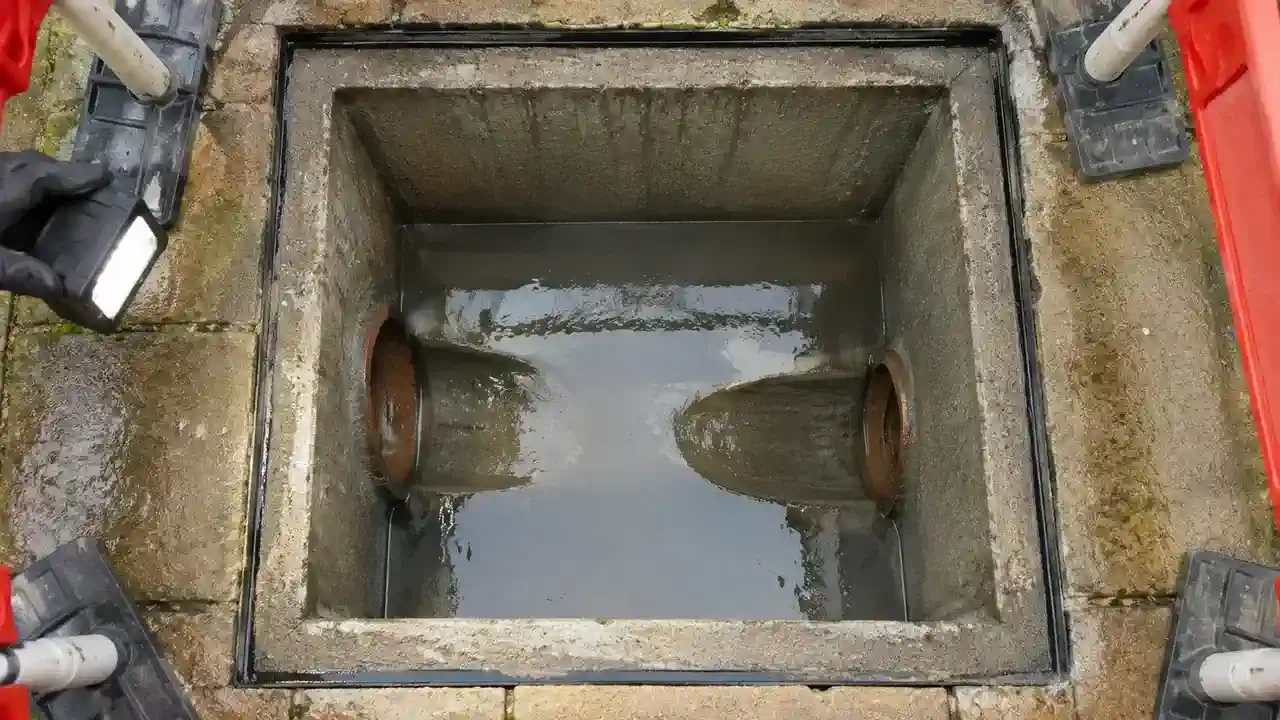
A manhole is an access chamber rather than the cause of a blockage. If wastewater remains high in the chamber, the restriction is usually within the outlet or a downstream drain; if the chamber is empty, the problem may be upstream or confined to a smaller waste pipe.
The observation is useful only when tied to the drainage route. A property can have more than one chamber serving foul water, surface water or separate buildings, so do not assume that the nearest cover connects to the affected fixture.
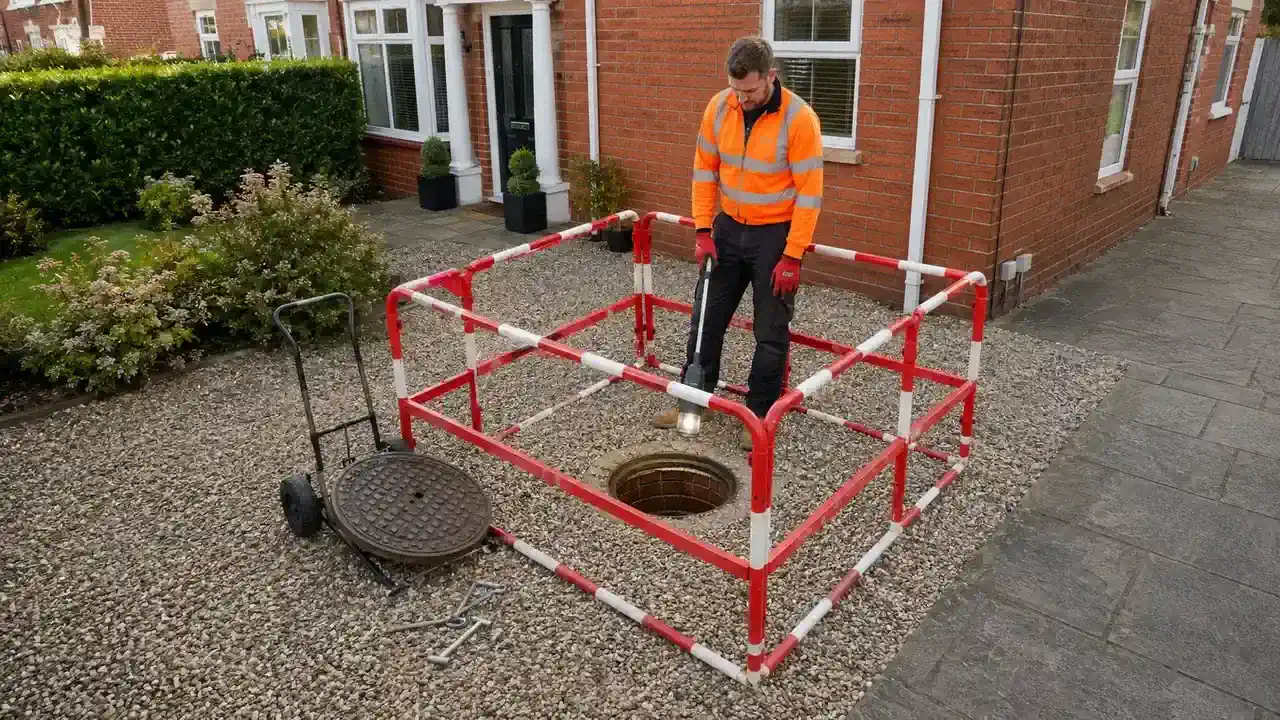
Safety comes before inspection
Drain chambers can contain toxic gases, low oxygen and biological hazards even when they appear shallow. Entry is confined-space work and is not a safe way for a householder to locate a blockage.
- Never climb into a manhole, septic tank or drain chamber
- Keep children, pets, tenants and customers away from wastewater
- Do not lift a heavy, damaged, trafficked or unstable cover
- Avoid using affected toilets, sinks and appliances while levels are rising
- Do not mix chemical drain cleaners or add chemicals to an overflowing chamber
Use chamber levels to describe the problem
The chamber is full and not falling
This can indicate a restriction beyond that access point. Report whether water rises when a toilet is flushed and whether the next safely visible chamber downstream is also holding water.
The chamber is empty but fixtures back up
The blockage may lie between the affected fixtures and the chamber, or in internal soil or waste pipework. The operator may need a different access point rather than working downstream from an empty chamber.
Several chambers or properties are affected
A wider pattern can indicate a shared lateral drain or public sewer problem. If only one private run is repeatedly affected, the guide to why drains keep blocking explains the records that help separate recurring deposits from a structural fault.
The cover is on a road or pavement
Do not interfere with highway apparatus or create a traffic hazard. Road gullies, highway drains and sewer covers have different reporting routes, and a blocked road gully is not the same as a blocked private foul drain.
Private drains, lateral drains and public sewers
Responsibility cannot be decided from the cover alone. The route, property boundary, number of properties served and whether the pipe forms part of the adopted network all matter.
Yorkshire Water publishes guidance explaining whose pipe may be involved, while Leeds City Council provides a reporting route for highway gullies. If the system is private or off mains, the owner may need a drainage contractor or the operator responsible for the tank or treatment plant.
How a manhole blockage may be cleared
Rods and retrieval tools
Rods can reach some nearby obstructions from a suitable chamber. The operator should understand the route and use equipment that reduces the risk of a rod separating, entering the wrong branch or damaging fragile pipework.
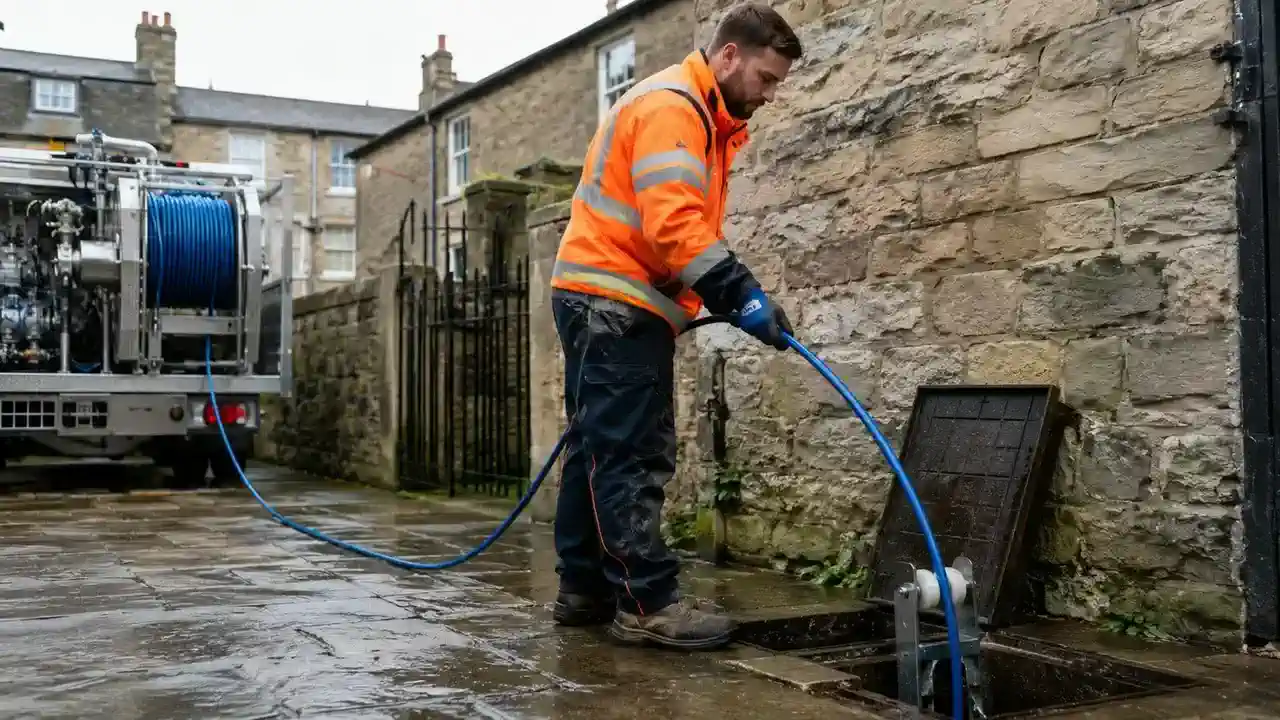
High-pressure water jetting
Jetting can break up and transport suitable deposits while cleaning more of the pipe wall. Nozzle selection, pressure, direction and containment need to suit the pipe, obstruction and risk of wastewater escaping at another point.
Mechanical removal and follow-up cleaning
Roots, hardened scale or other resistant material may need specialist cutting equipment. Restoring flow should be followed by enough cleaning and inspection; the post-clearance CCTV survey guide explains what should be visible before footage is used for a repair decision.
When the chamber itself needs repair
A loose cover, damaged frame, displaced channel, broken benching or leaking chamber joint is separate from a blockage in the connected pipe. The guide to drain repairs in Wetherby sets out the evidence needed before structural work is approved.
Do not infer a collapsed pipe solely because a chamber overflows. Clearance and a condition inspection can be needed before excavation, patching or relining is considered.
Information to give when requesting help
Clear information helps distinguish a private local obstruction from a wider network problem. It also helps the operator bring suitable access, containment and clearance equipment without making unsupported assumptions about the pipe.
- The full Wetherby-area postcode and position of the chamber
- Which toilets, sinks, gullies or buildings are affected
- Whether neighbouring properties have similar symptoms
- Whether the level rises, falls or remains unchanged
- Any earlier clearance, survey or repair records
- Access, parking, locked-gate or commercial-site restrictions
Local service information for Wetherby
For an active restriction, review the Wetherby drain-unblocking service. Explain which fixtures or chambers are affected, whether the problem has happened before and whether neighbouring properties report similar symptoms.