A recurring blockage is evidence, not a diagnosis
Restoring flow confirms that an obstruction has been opened, but it does not always establish why it formed. Grease, wipes, scale, roots, a displaced joint, deformation or poor pipe alignment can produce similar symptoms while requiring different next steps.
Record when the problem returns and which fixtures are affected first. A restriction close to one sink behaves differently from a downstream blockage that causes several toilets, gullies or inspection chambers to rise together.
Common reasons a Wetherby drain blocks again
Deposits were opened but not removed
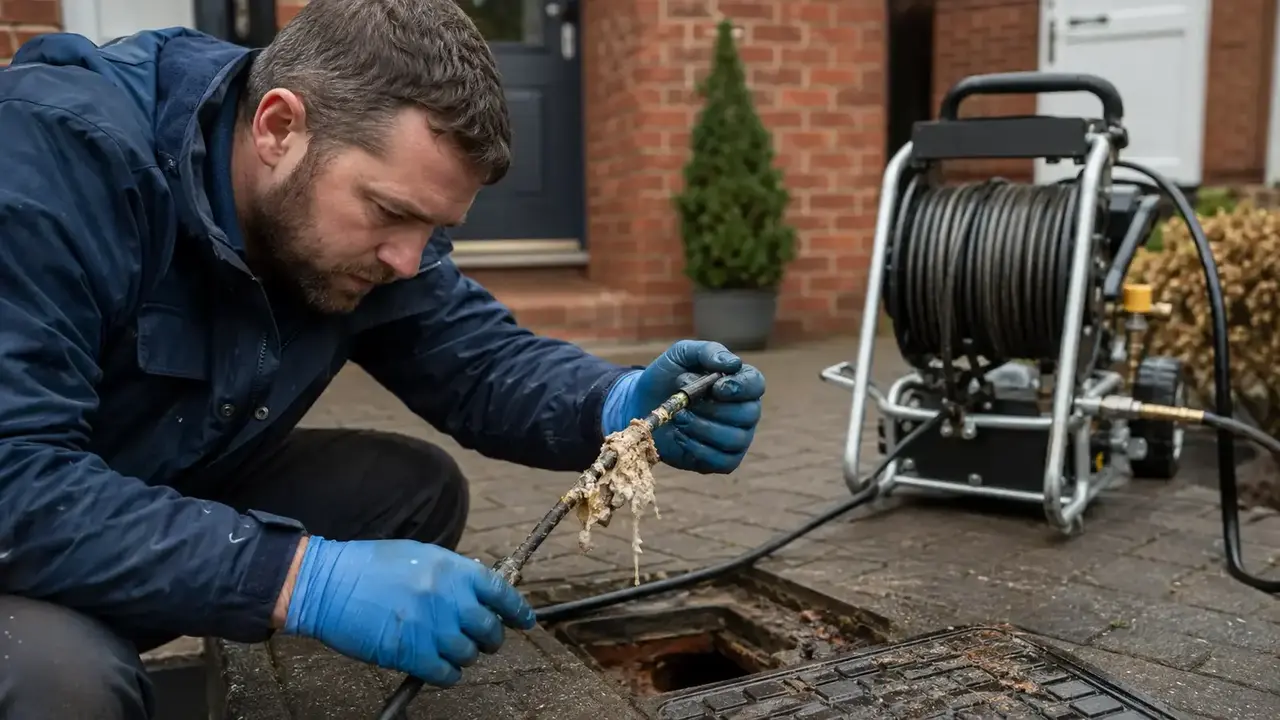
A narrow passage through grease, scale or compacted debris may let water escape temporarily while material remains on the pipe wall. Appropriate cleaning can be needed after the immediate obstruction is opened so that the usable bore is restored rather than merely pierced.
Roots have entered through a defect
Root cutting can restore flow, but the opening that allowed the roots into the drain may remain. The guide to a CCTV survey after a blockage explains how post-cleaning footage can identify an open joint, crack or fracture and show whether the surrounding pipe needs further assessment.
The pipe holds waste at one position
A displaced joint, deformation, rough damaged surface or section with poor fall can catch material repeatedly. Relining may seal some suitable defects, but it does not normally lift a sagging pipe or rebuild a collapsed section.
The wrong material continues to enter
Wet wipes, sanitary products, cooking fat, food particles and building debris can recreate a blockage even when the pipe is sound. The investigation should consider how the drainage system is used as well as its physical condition.
Use the symptom pattern to narrow the affected run
Do not enter a manhole or drain chamber, and do not lift a cover that is heavy, damaged or unsafe. The visible level can be reported to the drainage operator without anyone entering the confined space.
- One slow sink, bath or shower may indicate a nearby waste-pipe restriction
- Several ground-floor fixtures backing up can indicate a blockage farther downstream
- A full private inspection chamber can show that flow is not passing beyond that point; review the blocked-manhole guidance before attempting access
- An empty upstream chamber and a full downstream chamber can help narrow the blocked section
- Similar symptoms at neighbouring properties may indicate a shared or public-sewer issue
Why the clearance record matters
Keep the date, affected fixtures, access point, method used and position of any retrieved material. If jetting or mechanical cutting was used, note whether the drain received a post-cleaning camera inspection and whether the full affected run was accessible.
A sequence of comparable records is more useful than several unrelated invoices. It can show whether the obstruction returns at the same distance, follows a particular use pattern or involves a different section each time.
When CCTV inspection becomes proportionate
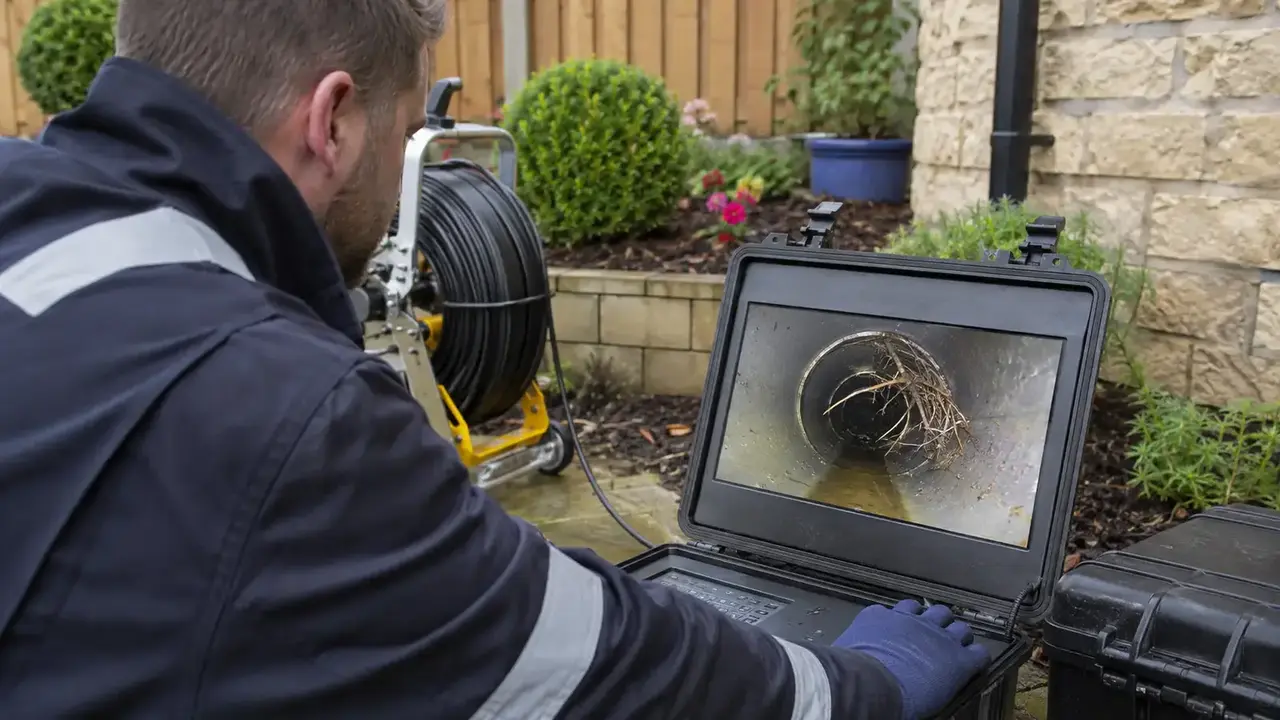
A first simple blockage caused by an identifiable object may not justify a full condition survey. Inspection becomes more useful when the restriction returns, roots or hard material are recovered, the operator encounters resistance, or the pipe is suspected to be cracked, displaced or deformed.
The camera normally needs a clear route and adequate visibility. Where the pipe is full of wastewater or deposits, clearance and cleaning may come first; the survey should state which runs were reached and which remained unseen.
Ask a defined question
The survey might locate a recurring restriction, inspect a suspected root entry or check whether a repair is needed. A defined question prevents a video from being treated as useful simply because footage exists.
Keep the findings tied to the route
The report should identify the access point, direction, measured distance and visible observation. A feature that cannot be related to the property layout is difficult to use for a targeted repair.
Choose the next step from the evidence
A clean pipe with no visible defect may need changes in use or risk-based maintenance rather than structural work. A local defect may justify a patch or excavation, while several compatible defects in a stable pipe may support consideration of a designed liner.
The recommendation should explain what was found, where it was found and why the proposed work is proportionate. Use the guide to when a blocked drain needs repair to compare that evidence with patching, relining and excavation options.
Reduce the chance of another blockage
Maintenance should follow the history and consequence of failure rather than an arbitrary interval. A busy commercial kitchen, a shared residential run and a household drain with no previous problem do not need the same plan.
- Flush only human waste and toilet paper
- Keep cooking fats, oils and food solids out of sinks
- Use strainers where hair or food particles enter smaller waste pipes
- Keep private inspection points accessible for future checks
- Retain drainage plans, footage and repair records with the property
Local service information for Wetherby
If wastewater is slow, backing up or holding in an accessible chamber, the main drain unblocking wetherby page explains the local clearance service, preparation, nearby coverage and responsibility checks.